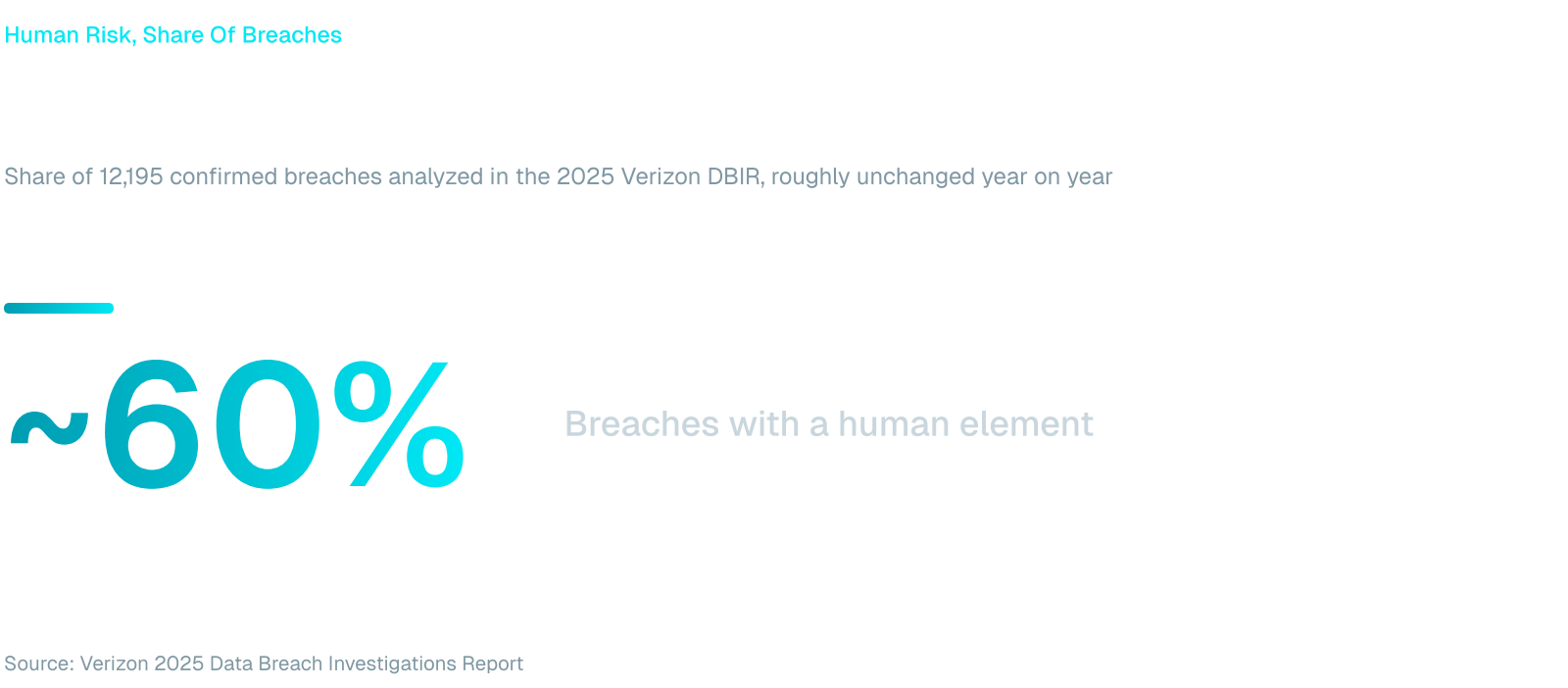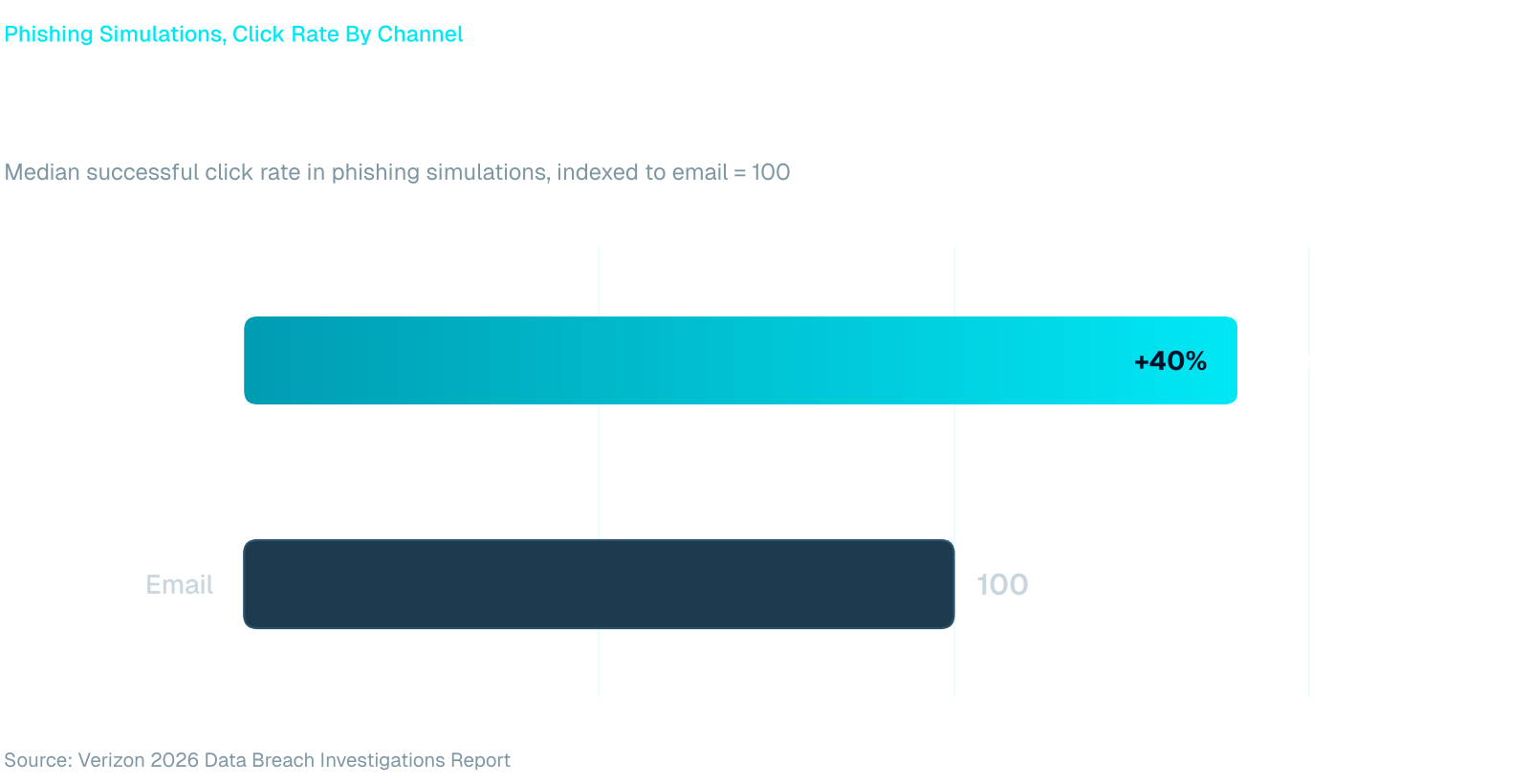





The FBI's Internet Crime Complaint Center logged 191,561 phishing and spoofing complaints in 2025, and business email compromise alone cost $3.05 billion in reported losses (FBI IC3 2025 Internet Crime Report). Behind most of those was one person deciding what to do with one message. If you are a security awareness manager shortlisting phishing simulation software, the real question is which product improves those decisions inside your own organization.
In short: judge phishing simulation software on lures matched to each person, languages your staff read, how much work it leaves your team, what it measures after the click, and where it runs. Test it on your own staff before you sign.
What Best Phishing Simulation Software Means
Searches for the best phishing simulation software tend to return ranked lists, and a ranking answers a question you did not ask. The right product for a bank's finance team in Dubai may be wrong for a hospital group running three shifts, or for a managed service provider with many clients. Define "best" with your staff, your languages and your hosting rules first, then compare.
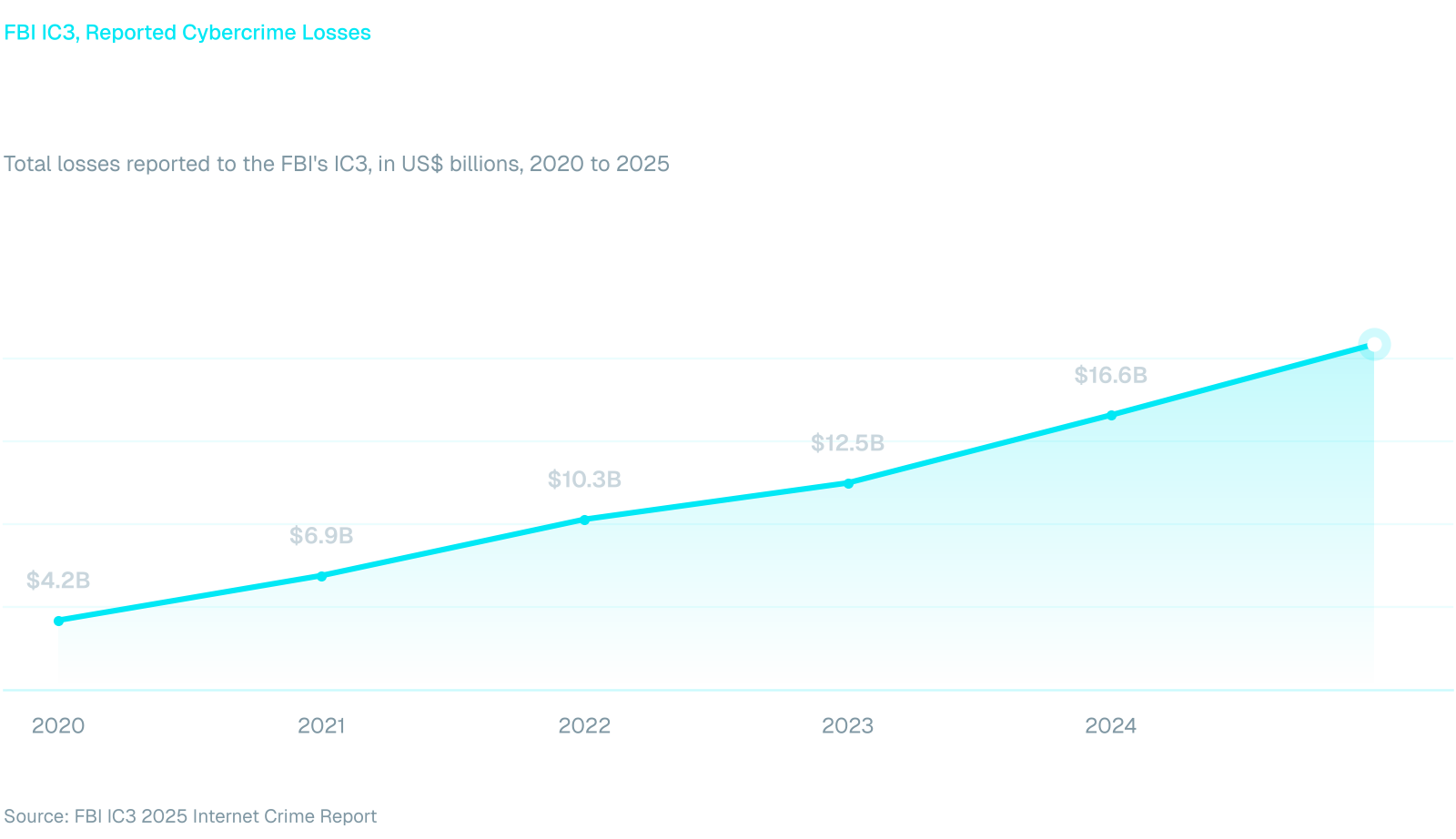
The pressure behind the purchase is real. Cybercrime losses reported to the FBI's IC3 climbed from $4.2 billion in 2020 to $6.9 billion in 2021, $10.3 billion in 2022, $12.5 billion in 2023, $16.6 billion in 2024 and nearly $20.9 billion in 2025, according to the IC3's annual reports.
A generic campaign sent to everyone at the same difficulty, once a quarter, tests an average employee who does not exist. The criteria below test whether a product can handle the actual people you employ, starting with what lands in their inbox.
Judge the Lures and Languages
Start with what the product sends. Phishing simulation tools differ most in how closely a lure resembles what your people receive. Ask whether it can match a role, so that an accounts payable clerk gets a supplier bank-detail request and an HR coordinator gets a CV attachment. Ask whether it covers current techniques such as credential harvesting, QR codes and attacks that get around MFA.
Language is the second test. An Arabic template that is a translation of an English one often reads like one, and staff notice. Ask to see Arabic templates written for Arabic readers, and ask how quickly you can build your own. Whitebait ships Arabic and English templates with QR code, credential harvesting and MFA bypass scenarios, and Dolus AI Studio turns a screenshot of a real suspicious email into an editable template. Our guide to what makes a template work gives you questions to ask in the demo.
Judge Cadence and Effort
Next, ask who does the work. A product that needs someone to plan, launch and review every campaign suits a team with time and strains a team of one or two. Count the hours it takes to build the audience, choose the template, schedule the send and chase the results, then multiply by twelve months.
Some platforms now automate parts of that cycle, and our post on automated phishing simulation shows what runs and what you keep. A further step is a program with no campaigns at all. Graybait is set up in four steps (connect the workforce, set guardrails, choose an objective, activate), then runs for twelve months. It picks each employee's next simulation from their Human Risk Profile and raises the difficulty as that person keeps spotting attacks. If your team is small, weigh this criterion heavily. The autonomous phishing simulation post explains how the model works.
Judge Measurement and Follow-Up
A click rate tells you who failed. Ask whether the product also reports how many people report the message and how fast, because reporting is the behavior that gives your security operations team an early warning. The post on reporting rate versus click rate explains why the pair matters. Ask too whether results are shown per person over time, not only as a department average.
Then look at what happens after the click. A reminder that arrives a week later does little for the person who clicked on Tuesday. Zero-Touch Training responds when a person shows a risky behavior, with training matched to that behavior and delivered inside Microsoft Teams, with no manual step. Whatever product you assess, ask how long it takes between the click and the response, and who has to act in between.
Judge Hosting and Governance
Hosting decides whether a product is even allowed. Ask where employee data and simulation results are stored, whether UAE or GCC hosting is available and whether a fully on-premise deployment is possible. Entities with strict data residency rules should ask about the last one first, and the post on on-premise phishing simulation covers that case. UAE buyers will find the local checks in our guide to phishing simulation in the UAE.
Then ask how the vendor itself is governed. ISO/IEC 27001 certification, UAE Information Assurance compliance and alignment with the NIST Cybersecurity Framework are reasonable things to request, and Fraus has all three. If you serve several clients or business units, check for separate environments per client, approval workflows and an audit trail.
Run a Phishing Simulation Platform Comparison
A phishing simulation platform comparison made from brochures compares claims. A pilot compares what happens. Pick two or three products and give each the same group of real employees, the same weeks and both languages. Then score every product on one sheet:
- Does the lure match the role and language of the person who receives it?
- How many hours of staff time does it need each month?
- Does it report reporting rate and time to report next to click rate?
- How long between a risky action and the training response?
- Where does the data sit, and who can see it?
- Are results kept per person over time?
Set the weights before the pilot starts, not after. A team of two will weight effort heavily, a regulated entity will weight hosting, and a finance-heavy organization will weight role-matched lures. Agreeing the weights first stops the most polished demo from deciding the result.
That brings you back to the person with one message and one decision. Choose the product that prepares that person best, not the one with the longest feature list. A practical next step is to write your weights this week, then use our phishing simulation best practices for GCC teams to shape the pilot. If you want to see how Whitebait handles your pilot group, start from its product page.
Frequently Asked Questions
What is phishing simulation software?
It sends realistic but harmless phishing messages to employees, records who clicks, enters data or reports them, and delivers training based on what happened. The useful versions match lures to roles and languages, run on a continuous schedule and show behavior per person, not only a company-wide click percentage.
How many phishing simulation tools should I pilot?
Two or three is enough to see real differences without overloading your staff or your team. Give each the same pilot group, the same period and the same scoring sheet, so the results compare fairly and you can see which product handled your people best.
Does phishing simulation software need Arabic templates?
If part of your workforce reads Arabic, yes. Messages written natively in Arabic look like what staff actually receive, while a translated English template can look wrong in ways that make it easy to spot. Ask to see Arabic content, not a language switch.
Can a small team run phishing simulation software?
Yes, if the product keeps the workload low. Compare how many hours each one needs per month for planning, launching and reviewing. A campaign-less program such as Graybait is built for minimal administrative effort, and the team steps in only when the system asks.