


Dubai's Roads and Transport Authority has warned residents about a text message that claimed a 50 dirham traffic fine was due soon and would rise by 500 dirhams that day (Gulf News). A template library built from a password reset, a parcel notice and an invoice, translated once and sent to everyone, has nothing that looks like it.
Phishing simulation templates decide what your staff actually practice. This guide is for security awareness managers who build or review them and want a set that fits UAE and GCC staff who work in Arabic and English.
In short: A good template copies one believable situation from the recipient's working week, asks for one action, leaves one findable tell and arrives in the language that person works in. Pick by role, rotate the lure and not only the wording, and keep guardrails on content.
What Makes Phishing Simulation Templates Good
Believable context. A template works when it fits something the recipient already expects or worries about. A fine notice reaches a driver, a supplier bank-detail change reaches accounts payable, a document request reaches a project coordinator. Sent to the wrong role, the same message teaches nothing, because nobody believed it for a second.
One request. Ask for one click, one reply or one approval. A message that asks for three things reads as a test, and staff learn to spot the test instead of the lure.
A findable tell. Every template needs a flaw a careful person can find, such as a sender domain that is slightly off, a link that goes somewhere unexpected or a payment instruction that skips the usual approval. Without one, a click proves nothing and a report is luck.
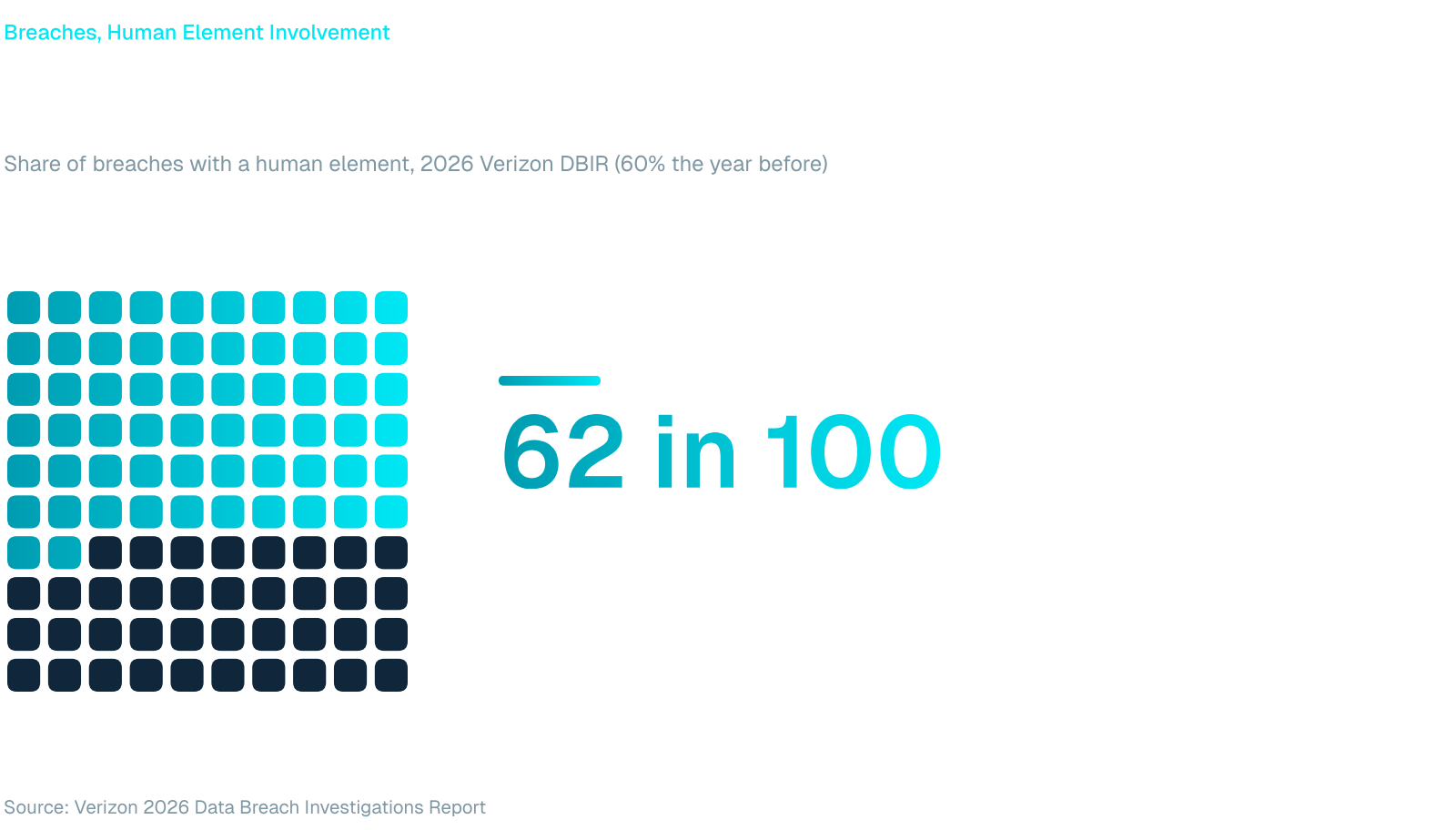
These details matter because people are where attackers aim. The 2026 Verizon Data Breach Investigations Report found the human element present in 62% of breaches, up from 60% the year before. That is the case for templates built around real work instead of a generic lure.
Phishing Email Examples for Training GCC Staff
The examples below are fictional and written to be adapted. Each pairs a lure with the role most likely to receive it, and an Arabic subject line you would send beside the English one.
- Fine notice for drivers and field sales. English: "Unpaid traffic fine, pay today to avoid a higher charge." Arabic: "غرامة مرورية غير مسددة". The tell is a payment link on a domain the authority does not use.
- Payroll confirmation for all staff. English: "Confirm your salary details before the next payroll run." Arabic: "تأكيد بيانات الراتب قبل موعد صرف الرواتب". The tell is a sign-in page on an unfamiliar address.
- Shared document for project and operations teams. English: "Revised drawings for your review." Arabic: "مخططات معدّلة للمراجعة". The tell is a sender from outside the project's usual domains.
- Mailbox warning for everyone. English: "Your mailbox is almost full." Arabic: "صندوق بريدك على وشك الامتلاء". The tell is a link that does not match the IT portal staff know.
- Courier notice for procurement and reception. English: "Delivery on hold, customs fee due." Arabic: "شحنتك معلّقة بانتظار سداد الرسوم الجمركية". The tell is a fee requested by link instead of through the usual courier account.
Write the Arabic templates in Arabic instead of translating the English ones. Greetings, titles and the tone of an official notice differ, and a stiff translation becomes a tell of its own that staff learn. Mixed-language threads are common in GCC workplaces, so include a few that switch language midway. The same thinking applies to Arabic training content.
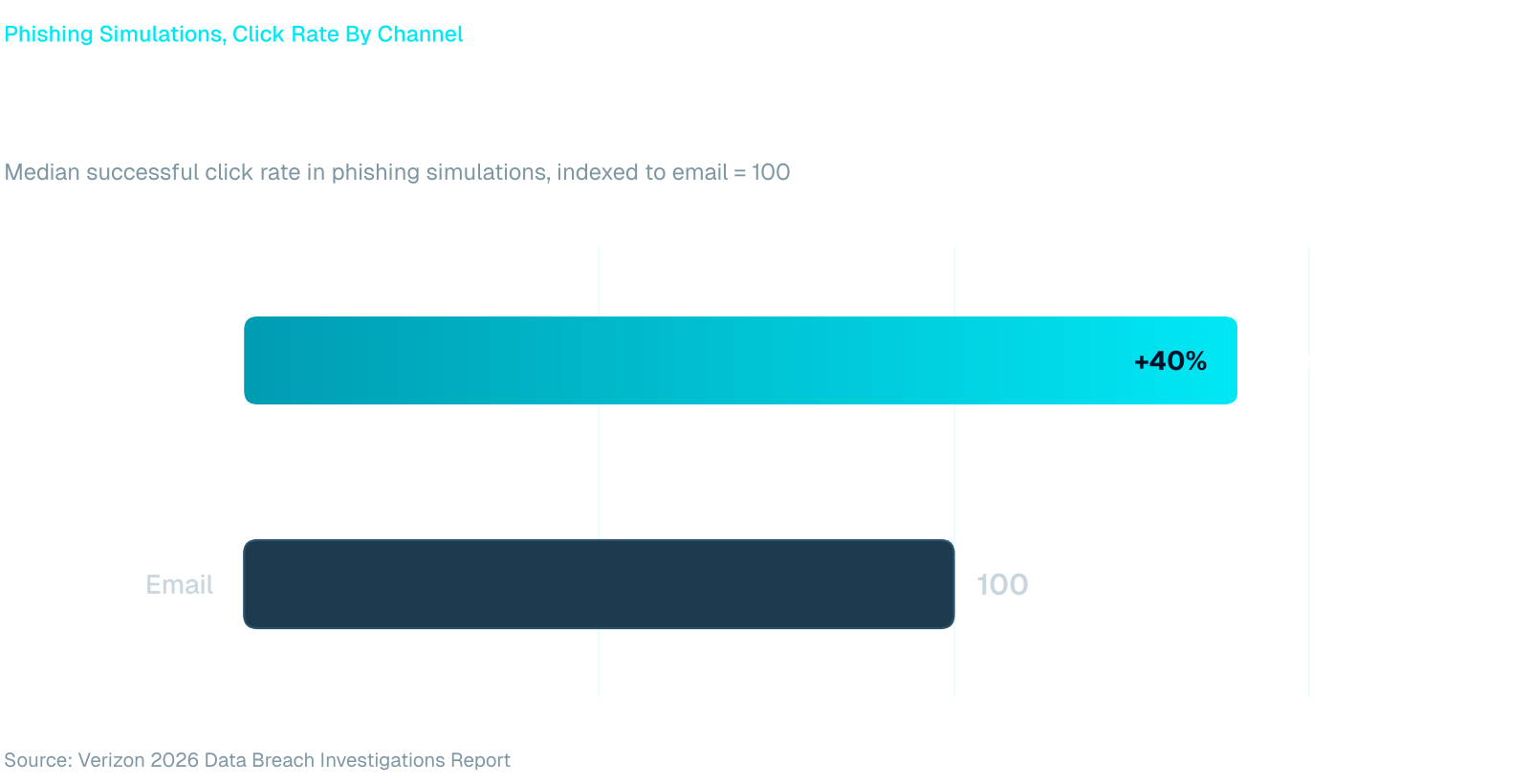
Text and voice lures need their own templates. In the Verizon report, the median successful click rate in simulations for voice and text lures is 40% higher than for email, and the UAE Cyber Security Council said in February 2026 that fraudulent messages had grown by about 35 percent over the past year (Khaleej Times). Our guide to smishing awareness training covers what to practice.
BEC Simulation Templates for Finance Teams
BEC simulation templates are built differently. There is often no link and no attachment, only a request for a change or a payment, so the tell sits in the process and not in the markup. Business email compromise training for finance teams covers the response, and the templates give it something to practice against.
Supplier bank-detail change. A reply on an existing invoice thread asks accounts payable to update the beneficiary account before the next payment. The tell is a new account and a request to skip the call-back to the number on file.
Executive request. A message that appears to come from a director asks finance to arrange an urgent transfer before a trip and to keep it quiet. The tell is secrecy combined with a deadline that bypasses the approval chain.
Payroll change. An employee asks HR to move their salary to a new account. Time these to the work, such as the day before a payment run or at month end, when a verification step feels like a delay. Score whether the person called back on a known number, not only whether they replied.
Rotate Phishing Training Templates by Role
Start with role. Finance gets payment and supplier templates, executive assistants get calendar and request lures, field staff get fine and delivery notices, IT admins get access and mailbox warnings. Everyone gets a small shared core, so that one weak spot in a department does not go untested.
Rotate the situation, the channel and the pressure being applied (urgency, authority, fear of a penalty), not only the subject line. A fine notice with a new subject line is the same lure. Match the calendar too: Ramadan and Eid schedules, leave and travel season, and year-end budget approvals each change what feels routine.
Then raise the difficulty. Start with a tell that is easy to find, make it subtler as a person keeps spotting attacks, and stop using a method on someone who has already beaten it.
Doing this by hand for a whole workforce is heavy, which is why Graybait has agentic AI pick or generate each employee's next simulation from their Human Risk Profile and set its difficulty, theme and timing. When a new lure lands in someone's inbox, Dolus AI Studio turns a screenshot or prompt into an editable template.
Template Guardrails
Program rules such as cadence, approvals and escalation are in our guide to phishing simulation best practices. The rules below apply to the template itself.
- Leave out pay cuts, redundancy, bonuses withheld, illness and legal threats. They cause distress that outlasts the lesson.
- Do not use the name of a real employee as the sender without that person's agreement.
- Send landing pages to a safe page that explains the tell, and never capture real passwords.
- Have HR and legal review any template aimed at a sensitive group before it goes out.
Choose Your Next Three Templates
Go back to the fine notice. Write it in Arabic and English, send it to the roles that drive and travel for work, and add one supplier bank-detail template for finance. Then check which tells people found, which they missed and who reported. Whitebait includes Arabic and English templates if you want a starting set.
Frequently Asked Questions
What are phishing simulation templates?
They are the messages, landing pages and follow-up pages used to run a simulated attack. A template sets the sender, the situation, the request and the tell. Good ones copy a situation a real employee could face, so the practice carries over to real mail.
How many phishing training templates do we need?
Enough that no one meets the same situation twice in a short period. Start with one template per major lure type in each language, then add role-specific ones for finance, executives and field staff. The number matters less than variety and fit.
Should templates be in Arabic or English?
Use the language each person works in, and write Arabic templates in Arabic instead of translating them. Include some mixed-language messages, because many GCC staff switch between both in a single thread. Track results by language so a gap in one does not hide in the average.
When should I retire a template?
Retire it for a person once they have spotted and reported it, and rotate the situation instead of only changing the subject line. Retire it for everyone if the lure appears in real attacks in a different form, and replace it with the current version.