




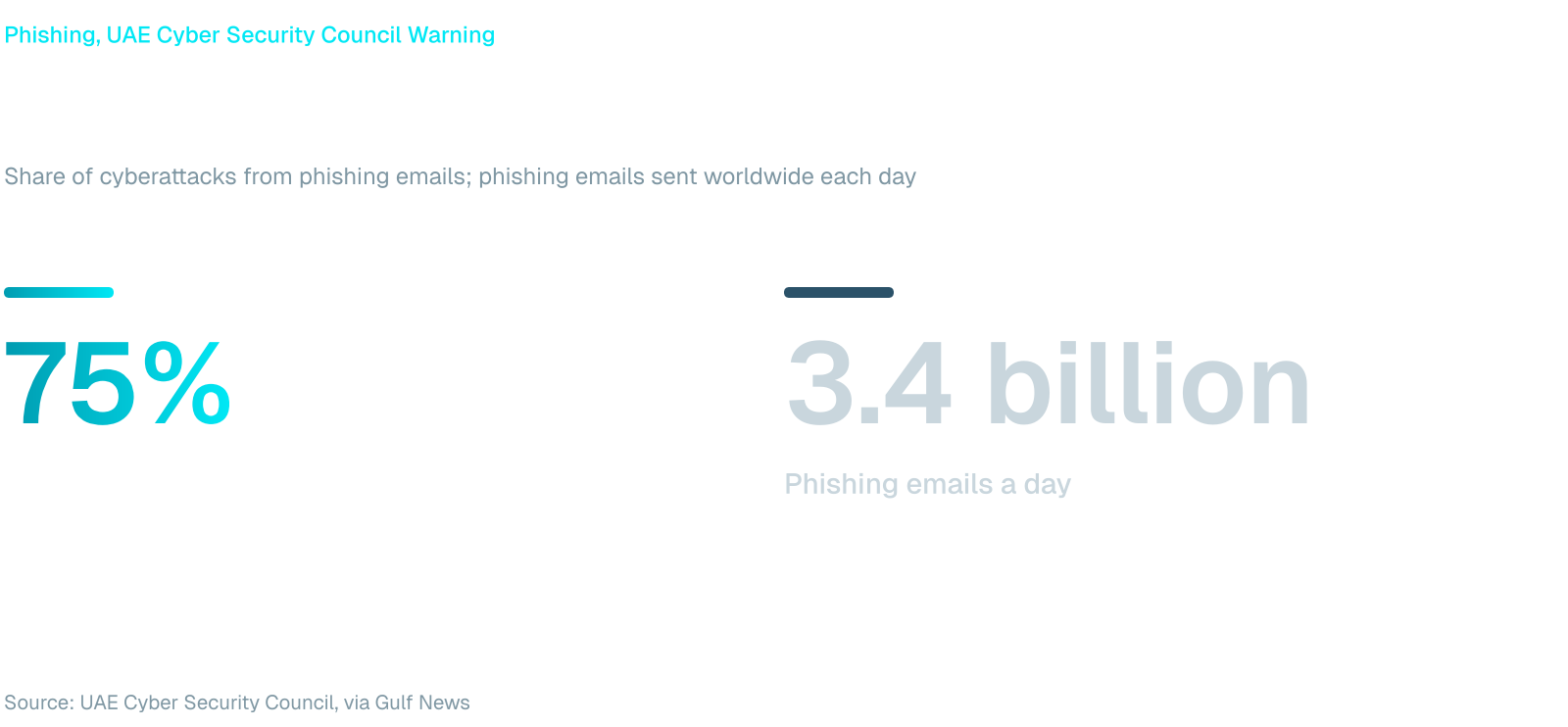
An accounts payable clerk, a site engineer and a network administrator all open email at 8 a.m., and they do not receive the same attacks. The UAE Cyber Security Council has warned that 75% of cyberattacks originate from fraudulent phishing emails, as reported by Gulf News, yet most training still hands all three the same annual course. This guide is for security awareness managers and GRC leads who want role based security awareness training that matches what each job actually faces.
In short: Role based training gives each group lessons and simulations built around the requests it really handles, and weights risk by how much damage a role could cause. Start with a few role groups and measure each one separately.
What Role Based Security Awareness Training Covers
The Council's warning is also about volume. It says more than 3.4 billion phishing emails are sent every day worldwide. At that scale, a generic lesson on spotting a suspicious sender covers the average inbox and misses the specific one. A procurement officer gets supplier invoices, an HR coordinator gets CVs with attachments, and an IT administrator gets fake vendor and helpdesk messages.
Role based security training answers that gap in two places. The first is learning: what people are taught and when. The second is testing: which simulated attacks they face. Treating them as one program keeps the lesson and the lure consistent, so the person who learns about a fake bank-detail change is later tested on exactly that.
The same logic sits in recognized guidance. NIST SP 800-50 Rev. 1 describes a life cycle approach to awareness, training and education programs for a diverse set of employee audiences, with suggested metrics and evaluation methods. In practice, those audiences are roles.
Building Role Specific Learning Paths
Role specific security awareness training starts with a short list of role groups, not one path per job title. Most organizations can begin with five or six: finance and procurement, HR, IT and administrators, executives and their assistants, customer-facing staff, and everyone else. Each group gets a core module that everyone shares plus the scenarios that belong to its work.
In Codex, role-based learning paths sit alongside agentic AI-driven micro-learning in Arabic and English, with contextual lessons built on real-world scenarios. The agentic AI recommends or assigns lessons to each person from their training gaps and behavioral signals.
Keep the core short. Passwords, reporting a suspicious message and data handling apply to every role. Put them in one shared module and spend the rest of each path on what only that group meets: business email compromise for finance, deepfake awareness for executives, and Shadow AI and GenAI risk for teams that paste work into AI tools.
Role Based Phishing Simulation by Department
A path teaches; a simulation shows whether it stuck. Role based phishing simulation means the lure resembles the mail that role already handles. Phishing simulation by department is the simplest version: the finance team gets a payment request, HR gets an application, IT gets a vendor notice. The test is realistic because the message belongs in that person's day.
Department is only the first cut. Graybait goes further by running a campaign-less program. Its agentic AI picks or generates each employee's next simulation from their Human Risk Profile, and lures match the person's role, context and history. Difficulty rises as someone keeps spotting attacks, and a method is retired once that person has beaten it.
For a small team this matters in practice. Nobody has to plan twelve department campaigns. Setup is four steps (connect the workforce, set guardrails, choose an objective, activate), and the team steps in when the system asks. If you prefer to keep control of audiences, automation rules can target departments and directory groups.
Weighting Risk by Role Criticality
Not every click carries the same consequence. A mistake by someone who can approve payments or administer systems costs more than the same mistake by someone with little access. Odin applies role criticality weighting to its continuous per-employee risk scores, so a role's potential impact shows up in the score and not only the person's behavior.
That weighting decides where attention goes first. Higher-weighted roles can move faster to targeted lessons and closer review, while the rest stay on lighter paths. The method behind this is covered step by step in human risk assessment by role and department.
Measuring Each Role Separately
One organization-wide click rate hides the roles that matter. Report each role group on its own, and put reporting next to clicking.
- Report rate and time to report, by role group
- Repeat behavior: the same people missing the same lure type
- Weakness coverage: which scenario types each group has been tested on
- Difficulty progression: whether people are spotting harder lures over time
Read these quarterly against the risk weighting. A high-criticality role with a slow report time is a more urgent finding than a low-criticality role with a higher click rate.
Where to Start This Quarter
Return to the clerk, the engineer and the administrator from the start. Pick one group, usually finance, and give it one role-specific path and a matching set of simulations for a quarter. Compare its report rate and time to report with the baseline you hold today.
Then add the next group. If you want the role paths ready to go, see how Codex structures them in Arabic and English, and let Graybait and Odin handle the matching lures and the weighting.
Frequently Asked Questions
What is role based security awareness training?
It is awareness training organized by job function. Each group learns from scenarios drawn from its own work, such as payment requests for finance or vendor notices for IT, alongside a shared core on topics like reporting suspicious messages.
How is role based phishing simulation different from phishing simulation by department?
Department grouping is one form of it. A role based approach can go finer, matching lures to each person's role, context and history, which is how Graybait selects each employee's next simulation.
How many role groups should we start with?
Five or six is enough to begin: finance and procurement, HR, IT and administrators, executives and assistants, customer-facing staff and everyone else. Add more only when a group shows a distinct pattern in its results.
Does role criticality change who gets trained first?
It changes priority. Odin weights risk scores by role criticality, so roles with greater potential impact surface higher, and their lessons and review can be sequenced first.
Is the training available in Arabic?
Yes. Codex delivers security awareness training in Arabic and English, so the same role path can be run for both language groups.