




A phishing simulation holds a list of employees, their email addresses and a record of who clicked what. For a ministry, a regulated utility or a defense contractor, that list is sensitive on its own, and the question of where it lives can end a SaaS evaluation before the first campaign is built. This post is for CISOs and government security teams deciding when on premise phishing simulation is a requirement and what to check before they sign.
In short: Choose on-premises phishing simulation when law, a regulator or a classified network keeps employee data inside your own infrastructure. Then test the deployment: data flows, updates, mail delivery, reporting and Arabic content must all work without a connection you cannot allow.
When On Premise Phishing Simulation Is Required
Three situations push teams toward self-hosted phishing simulation, and the first is a legal duty on personal data. The UAE Personal Data Protection Law (Federal Decree-Law No. 45 of 2021) covers personal data processed through electronic systems and sets requirements for its cross-border transfer and sharing, as the UAE government portal explains. Employee names, emails and behavior records are personal data, so where the platform stores them matters. The platform has to keep that data wherever your legal team says it must stay.
The second is a sector or national rule. Saudi Arabia's Essential Cybersecurity Controls (ECC-2:2024) require an approved and implemented awareness program that covers secure handling of email, especially phishing emails, and the ECC points data localization questions to the National Data Management Office. In the UAE, the UAE Information Assurance Regulation obliges government entities and entities the telecom regulator designates as critical to implement it, and it includes an awareness and training program.
The third is the network itself. A network that is classified, or isolated from the internet by design, cannot send mail traffic or telemetry to an outside console, so a cloud service is not a matter of preference there. In every case the simulation has to run where the mailboxes are, and the attack it rehearses is common in exactly these sectors.
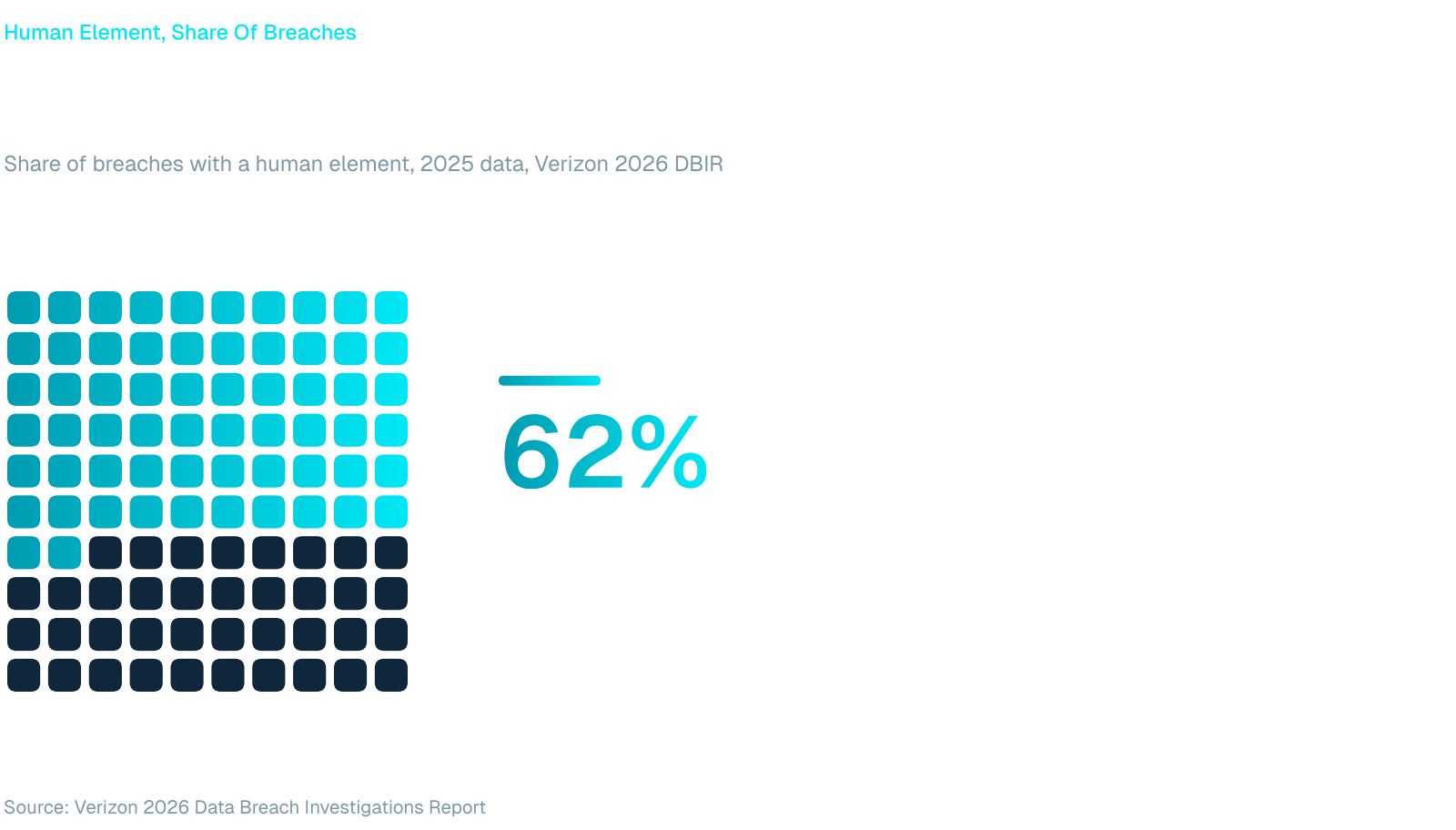
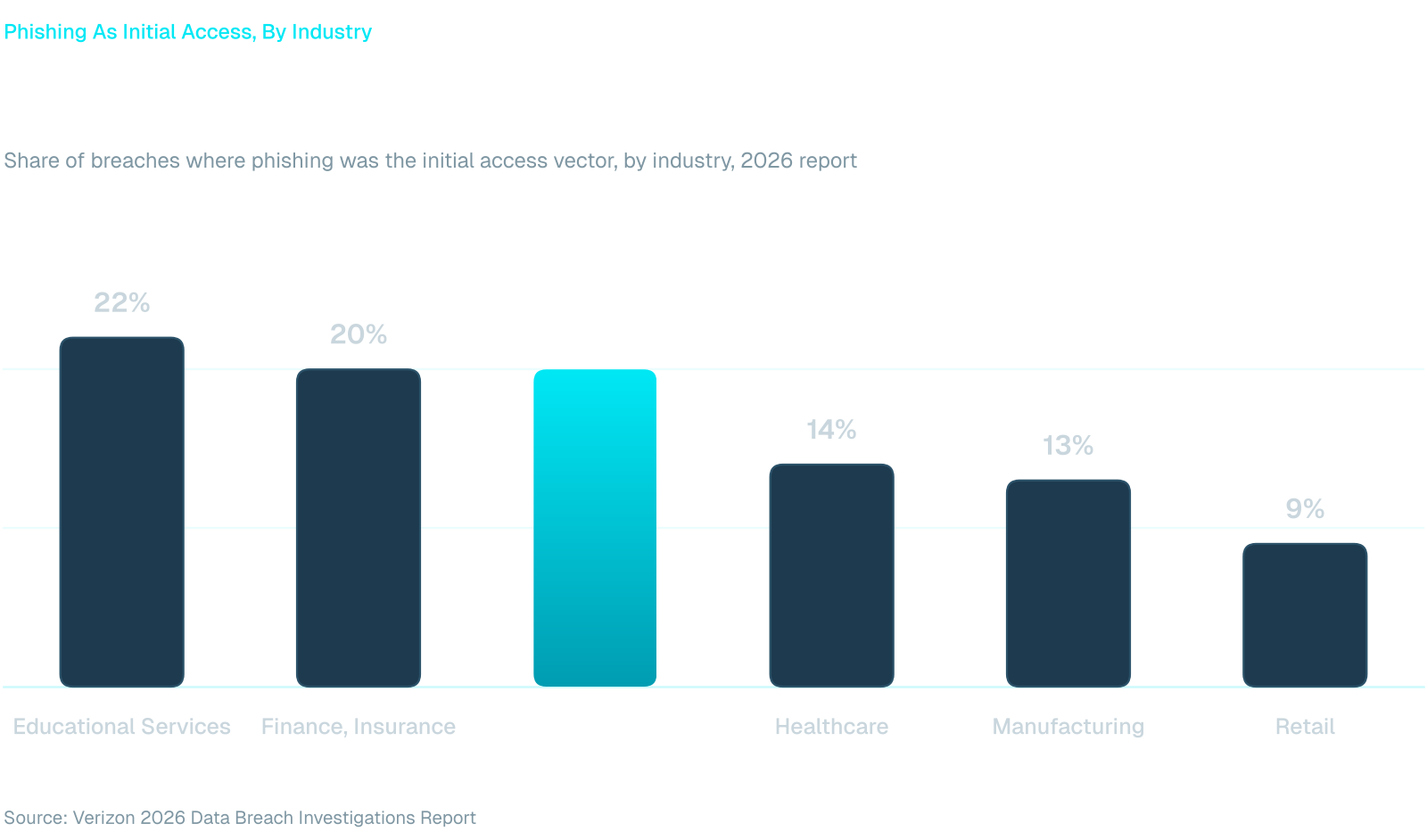
In the Verizon 2026 Data Breach Investigations Report, the human element was present in 62% of breaches. Phishing was the initial access vector in 20% of public administration breaches and 20% of financial and insurance breaches. The figure was 22% in educational services, 14% in healthcare, 13% in manufacturing and 9% in retail.
Phishing Simulation Data Residency or Isolation
Those situations lead to three different deployment models, and teams often treat them as one. Each asks for something different from the platform, and naming which one you face narrows the options quickly.
Data residency. The rule is about where data is stored and processed, so hosting inside the UAE or the wider GCC can satisfy it. The platform may still be operated by the vendor, which suits teams that want residency without running servers.
Self-hosted. The rule, or your own risk decision, keeps data inside infrastructure you control. Your team runs the servers, the vendor ships updates, and nothing reaches an outside service.
Isolated. The network has no route to the internet, or only a tightly controlled one. Everything the platform needs, from templates to updates, has to arrive through an approved transfer process.
Fraus can be hosted on UAE or GCC servers or deployed fully on-premise, so the requirement decides the model and the tool does not. Whitebait is the phishing simulation product for UAE and GCC organizations. Knowing which of the three models you need is what lets you ask the right questions about the deployment.
What to Check in a Deployment
A vendor demo shows the console. A deployment review shows whether the console works inside your constraints. Put these questions to any on-premise platform before the contract, and ask to see the answers in a test environment.
- Data inventory. Which fields are stored (names, emails, clicks, reports, anything entered on a landing page), and do logs, backups and support access keep them inside your infrastructure?
- Updates and content. How do new templates and software updates reach a network with no internet access, and who approves them?
- Mail path. How do simulated emails reach mailboxes through your own gateways and allow-lists, and how do user reports come back?
- Identity and access. Does it sync from your own directory, and can you limit which administrators see which departments?
- Languages. Do the Arabic and English templates render correctly, including right-to-left text, in your own mail clients?
- Audit and exit. Is there an audit trail of administrator actions, and can you set retention and deletion yourself?
Also ask who operates the platform day to day. The ECC-2:2024 requires cybersecurity managed service centers for monitoring and operations that use remote access to be fully located in the Kingdom of Saudi Arabia, so a vendor's remote support model can itself become a residency question.
Keep the Simulation Realistic Inside the Walls
An isolated deployment is only worth running if the program inside it stays current. Ask whether the on-premise build runs the same scenarios as the hosted one, and how fast new lures reach it. Whitebait covers AI-recommended campaigns, MFA bypass, QR code and credential harvesting scenarios, with Arabic and English templates and reporting rate tracked next to click rate.
The Arabic side deserves its own test, because lures that read as translated are easy to spot; the case for authored rather than translated content is made in a separate guide. For a small security team, Graybait is worth a look. It runs as a campaign-less program through agentic AI, so the team steps in only when the system asks, and it matches each person's next simulation to their Human Risk Profile.
For the wider buying questions, see what a phishing simulation platform should do in the UAE.
A Practical Next Step
Back at the start, the evaluation stalled on one question: where does the employee list live? Answer it in writing before you contact any vendor. Record where data must be stored, what the network may reach, and who approves updates.
Then pilot one department on the deployment you would actually use, with real mail gateways and real approvals. If the pilot works inside your constraints, the full rollout is a scale question. If it does not, you learned that before the contract.
Frequently Asked Questions
Why choose on-premises over SaaS phishing simulation?
Choose it when a regulation, a security policy or a network classification keeps employee data and mail traffic inside your own infrastructure. SaaS can suit teams without those limits. If in-country hosting satisfies the rule, hosting on UAE or GCC servers may be enough without running the servers yourself.
How long does an on-premises deployment take?
It depends less on the software than on your approvals: server provisioning, mail gateway changes, security review and change windows. Ask the vendor for a plan that lists each dependency and who owns it, agree dates in writing, and treat the pilot as the point where the real timeline becomes visible.
Which organizations need on-premises awareness tooling?
Typically government entities, critical infrastructure operators, defense suppliers and regulated institutions whose rules or risk decisions restrict where employee data goes, and anyone with isolated or classified networks. Your legal and compliance teams decide which rules apply to your entity.
Is data residency the same as on-premise?
No. Data residency is about the country where data is stored, and in-country hosting can meet it. On-premise means the platform runs inside infrastructure you control. Some entities need only the first, and others, especially with isolated networks, need the second.