
Healthcare Cybersecurity Solutions & Training

Healthcare Cybersecurity Solutions & Training

Hospitals and clinics run on shift work, shared workstations, and staff who are trained to act fast. Fraus measures human risk across clinical, administrative, and support teams, runs simulations that reflect healthcare workflows, and delivers short training that fits between patient responsibilities instead of taking people off the floor.

Healthcare in the UAE: A Sector Regulators Drill For

The UAE Cyber Security Council lists health among the country's most targeted sectors. In May 2025, the Department of Health Abu Dhabi (DoH) and the Council ran a sector-wide cyber drill, describing healthcare as a primary target because patient data is so useful for identity theft and fraud. DoH was the first health regulator in the UAE and the region to publish a cybersecurity strategy for its sector, and its ADHICS standard sets security requirements for healthcare providers in the emirate.

Technical controls carry much of that load. Many incidents still begin with one person's decision: a nurse opening an attachment between patients, or a billing clerk entering credentials on a portal that looks right. Hospitals in the UAE also employ staff from many countries, so awareness that only works in English leaves part of the workforce out.

Case Study

Ireland's Health Service Executive, 2021

01

What Happened

On 18 March 2021, an employee of Ireland's national health service, the HSE, opened an infected Excel spreadsheet that had arrived by phishing email two days before. The same user had received emails with the same subject line several times in the months leading up to it. Within two weeks, antivirus software on the workstation detected tools commonly used by ransomware groups, but the intrusion was not stopped.

The attacker stayed inside the network for about eight weeks. On 14 May 2021, Conti ransomware was detonated across the HSE. Clinicians lost access to patient records, clinical systems, and laboratory systems, and many went back to pen and paper. The HSE's director general estimated recovery costs would exceed US$600 million. An independent review by PwC, published in December 2021, found several missed opportunities to stop the attack before the ransomware ran.

02

Where It Turned on a Person

A spreadsheet in a work inbox does not announce itself as a decision. It looks like a task, and in a hospital environment tasks arrive faster than anyone can weigh them. The person who opened it was doing what the setting trains everyone to do: deal with what is in front of you and move on.

Familiarity worked against them. A message that resembles ones you have already seen reads as routine rather than as a warning, so each earlier attempt made the next one easier to accept, not harder. And once the file was open, the moment passed in silence. Nobody flagged it, nobody asked about it, and the organization's first sign of trouble came from software rather than from the person best placed to raise a hand.

03

How Fraus Would Have Helped

Repeated targeting of one person is itself a risk signal. Odin brings together signals from the security tools you connect, including email security, so a clinician who keeps receiving the same lure moves up the risk view and can be prioritized for targeted training.

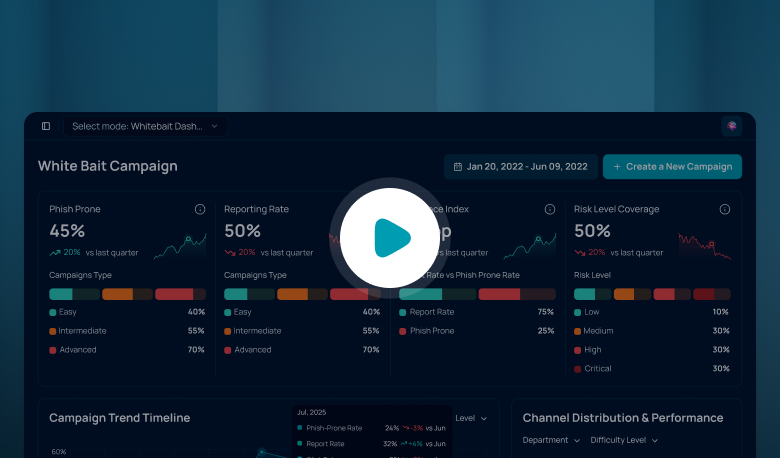
A suspicious attachment is only useful to the security team if someone reports it. Whitebait simulations, including lures rebuilt from real emails in Dolus AI Studio, teach staff to report instead of open, and reporting rate is tracked next to click rate. With the Teams App, reporting takes one tap.

Training has to fit around patient care. Codex delivers short modules in English and Arabic, and Zero-Touch Training assigns them only when a person's behavior calls for it. For UAE providers who need data to stay in their own environment, Fraus can run on-premise.

The same lure reached the same inbox several times before it was opened. Every one of those emails was a chance to report it, and Fraus trains people to take it.

The Fraus Platform for Healthcare

Codex

Codex

Short modules in English and Arabic built around real scenarios, including how attackers use urgency, authority, and fear. AI recommendations send each person to the topics where they are weakest.

Explore

Whitebait

Whitebait

Simulations in multiple languages at calibrated difficulty levels. New staff can start on foundational scenarios, and the difficulty rises as their results improve.

Explore

Odin

Odin

Individual risk profiles and department-level views, with automatic escalation to managers and the security team when someone's risk crosses a critical threshold.

Explore

Teams App

Teams App

For organizations on Microsoft Teams, staff report suspicious messages with one tap and complete training and policy acknowledgements as Teams messages.

Explore

Questions Healthcare Security Teams Ask

Will training take clinicians away from patients?

Codex uses micro-learning designed for minimal disruption, and Zero-Touch Training assigns content only when a person's behavior calls for it, instead of putting everyone through the same long course.

Is training available in Arabic?

Yes. Codex supports English and Arabic in full, and Whitebait runs localized simulation campaigns that include Arabic.

How do we avoid staff feeling caught out by simulations?

Fraus treats a clicked simulation as a learning moment. The person sees what they missed and gets targeted guidance straight away. Reporting rate is tracked alongside click rate, so the people who flag suspicious messages are visible too.

Can we keep Fraus data inside our own environment?

Yes. Fraus can be deployed on-premise, which keeps its data inside your own environment and under your control.