


A finance analyst pastes a draft board paper into a public AI assistant to tighten the wording, signed in with a personal email address. Nothing about that moment feels like an incident to the person doing it. This post is for CISOs and GRC leads who want to see how shadow AI risks show up in their own workforce and what to do about them.
In short: Shadow AI risks come from ordinary, well-meant work: staff pasting data into unauthorized AI tools. Measure who does it and what they share, give people an approved route, and coach each person when the behavior happens.
What Shadow AI in the Workplace Looks Like
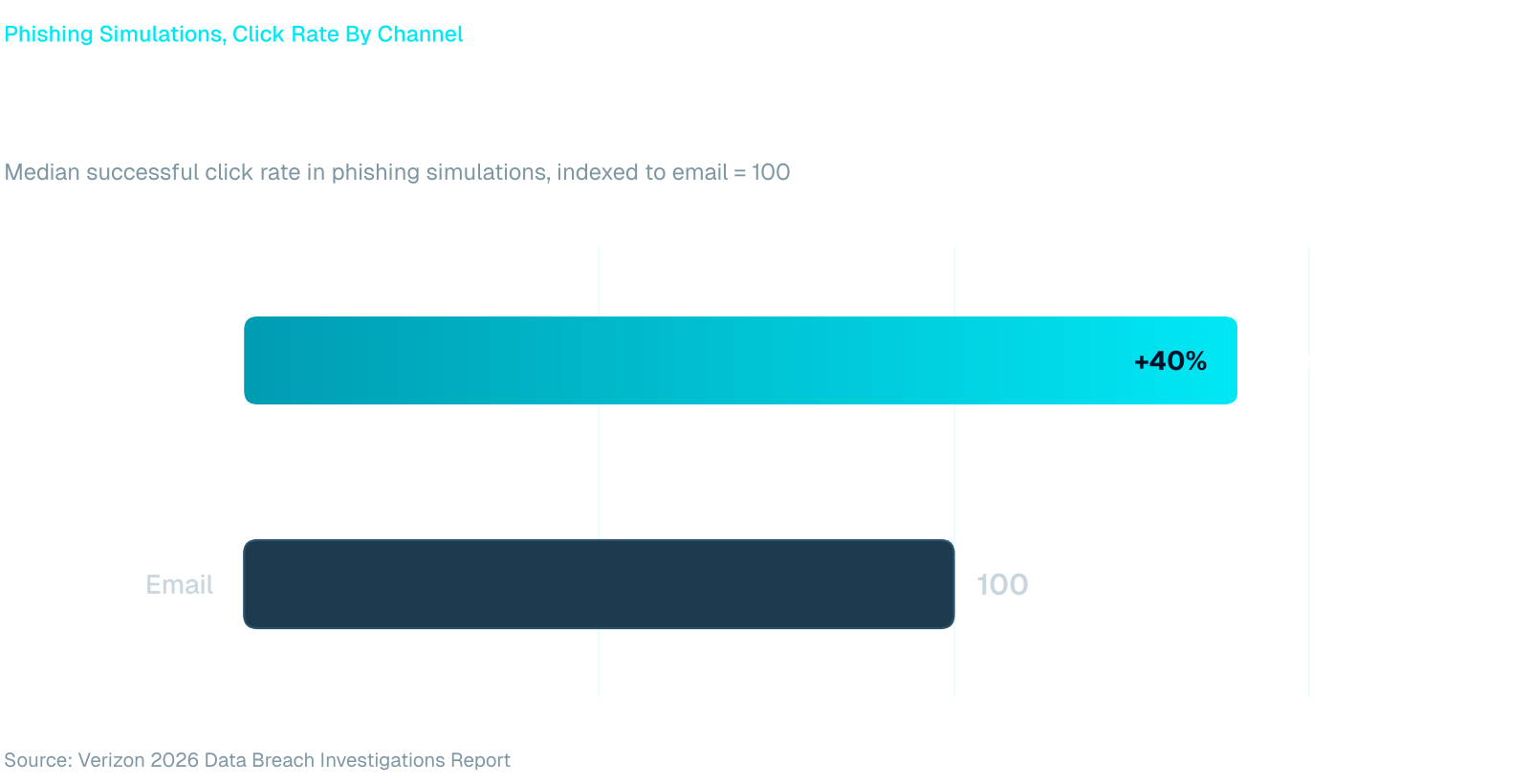
Shadow AI in the workplace means AI tools and accounts your organization has not approved, used on work devices or with work data. The 2026 Verizon Data Breach Investigations Report found that frequent AI use by employees rose from 15% to 45% in a single year, and it ranks shadow AI as the third most common non-malicious data leakage activity. The report also found that 67% of users reached AI services from corporate devices through non-corporate accounts.
The gap between use and governance is wide. In a 2025 ISACA poll of 3,029 digital trust professionals, 81% believed employees in their organization use AI whether it is permitted or not, while only 28% of organizations had a formal, comprehensive AI policy (ISACA). Staff are not waiting for the policy to catch up.
The concern has reached the UAE too. Reporting from the AI Everything summit in Abu Dhabi, The National noted in October 2026 that if an employee’s personal account is hacked, company data held in it could end up in the wrong hands. The practical question for a security team is what exactly leaves the building.
Where Employee AI Data Leakage Happens
Employee AI data leakage follows tasks, not tools. The same four moments come up in most organizations, and each one takes a few seconds.
Summarizing and rewriting. Contracts, board papers and HR case notes go into a prompt to get a cleaner version. The document is now held by an external service the security team never assessed.
Code and technical documents. Reporting on the 2026 DBIR describes employees uploading source code, technical documents and other sensitive data to external AI platforms (eSecurity Planet). In 2023, a large electronics manufacturer restricted staff use of generative AI after engineers reportedly uploaded internal source code to a public chatbot.
Customer and personal data. The UAE federal personal data protection law applies to the processing of personal data, requires companies that hold it to keep it secure and confidential, and sets requirements for moving it across borders (UAE Government portal). Pasting customer records into an external tool is a data protection question as well as a security one.
Personal accounts. When an employee signs in with a personal address, the prompt history sits in an account the company cannot see, review or close when that person leaves.
None of these four looks like an attack, which is why the usual detection mindset misses them. Seeing them takes measurement designed for behavior.
Measure Shadow AI Risks Before You Ban Anything
A ban written before you know the size of the problem tends to be either ignored or too broad to enforce. Start with the questions a board will ask: how many people, with what kind of data, how often, and does it stop after they are told. Five measures answer those.
- Share of AI use through corporate versus personal accounts.
- Data loss prevention events with an AI destination, per 100 employees, by department.
- Repeat rate: people with a second event within 30 days of the first.
- Time between an event and the coaching the person receives.
- Share of AI users working in the approved tool.
Most security stacks already hold the raw signals in web gateway, identity, endpoint and data loss prevention logs. What they rarely hold is the link between a signal and a person with a role. Odin scores human risk continuously for each employee and weights it by role criticality, so an event in a payroll or legal team reads differently from the same event elsewhere. Our guide to security awareness metrics covers how to report the trend.
A register of observed and approved tools is the natural companion to these numbers. The UAE Cyber Security Council’s National Cyber Security Policy for Artificial Intelligence sets minimum security requirements for organizations adopting AI in the UAE and includes maintaining an inventory of AI assets, so the register earns its keep twice. Once you can see the behavior, the next job is changing it.
Reduce Use of Unauthorized AI Tools by Person
Give people an approved route for the tasks they already do. A policy that only says no leaves the summary unwritten and the deadline in place, so the task finds another way out. Name the approved tool, the data classes it may touch, and who to ask when a task does not fit.
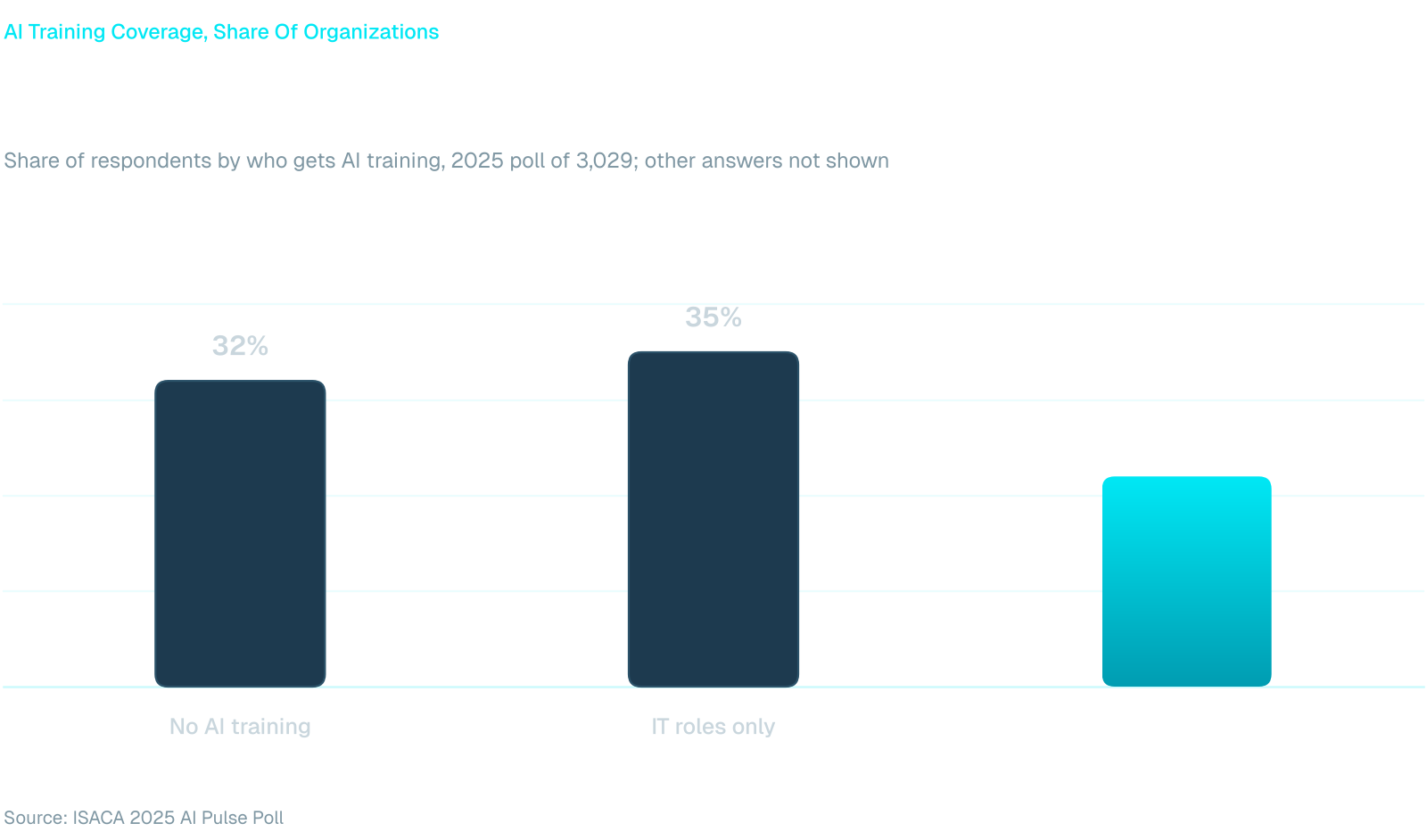
Training is the part most organizations have not built. In the same ISACA poll, 32% of organizations provide no AI training to any employees, 35% train only people in IT-related roles, and only 22% train all employees.
Annual, one-size-fits-all content will not close that gap, because a finance analyst and a developer leak different data in different ways. Codex covers Shadow AI and GenAI risk in Arabic and English, and its agentic AI recommends or assigns short lessons to each person from their gaps and behavioral signals.
The response also has to arrive while the behavior is fresh. With agentic automation rules, a data loss prevention event can trigger a nudge, a module or a policy assignment for the right audience, notify the employee’s manager, and leave higher-stakes actions waiting for analyst approval, with every agentic action logged for audit. The coaching reaches the person inside Microsoft Teams through just-in-time coaching, in the flow of work.
Your Next Step
Go back to the analyst with the board paper. Pick one department that handles sensitive data, such as finance, legal or HR, and pull 30 days of AI destination events and account types. Publish the approved route to that team, set one response rule for the highest-risk event, and measure the repeat rate at day 30.
That single department gives you a baseline and a before-and-after you can show the board. To see how Odin scores human risk by employee and role, visit fraus.ai/products/odin.
Frequently Asked Questions
What are the main shadow AI risks?
Sensitive data leaves your control through prompts and uploads, often from personal accounts you cannot see or close. The data can include customer records, source code and board material. Because use is spread across many people and tools, you also lose the record of what was shared, which complicates data protection obligations and incident response.
How do I find unauthorized AI tools in use?
Combine the logs you already hold: web gateway and DNS traffic to AI services, identity sign-ins, endpoint and data loss prevention events. Then map each event to a person, a role and an account type. The aim is a register of tools and behaviors by department, not a list of names to punish.
Should we ban public AI tools?
A ban without an approved alternative leaves the underlying task unsolved. Block clearly unacceptable destinations, publish an approved tool with rules on the data it may touch, and coach people when they step outside those rules. Review the measures at 30 days and tighten where repeat behavior continues.
Does training reduce employee AI data leakage?
Training works best when it follows the person: lessons matched to role, delivered when the behavior occurs, and measured by repeat events rather than course completion. An annual policy course alone rarely matches how data actually moves. Track the repeat rate and time to coaching to see whether behavior is changing.