




Security teams in the UAE tend to inherit awareness tooling in pieces: a training library bought one year, a phishing tool the next, and a spreadsheet that ties neither to what a person actually does. That patchwork is hard to defend in front of a board or an auditor. This guide is for CISOs and awareness managers choosing one cybersecurity awareness platform UAE organizations can run end to end.
In short: a good platform trains people in Arabic and English, simulates varied attacks, scores risk per person, acts on that score automatically, and reaches staff inside their daily tools. Fraus covers each of these, and the sections below show how.
What a Cybersecurity Awareness Platform UAE Buyers Need
Most programs start as a training purchase and add the rest later. A phishing tool arrives after an incident, reporting gets built by hand, and Arabic-speaking staff receive a translated course. Each piece works alone, and none of them knows what the others saw.
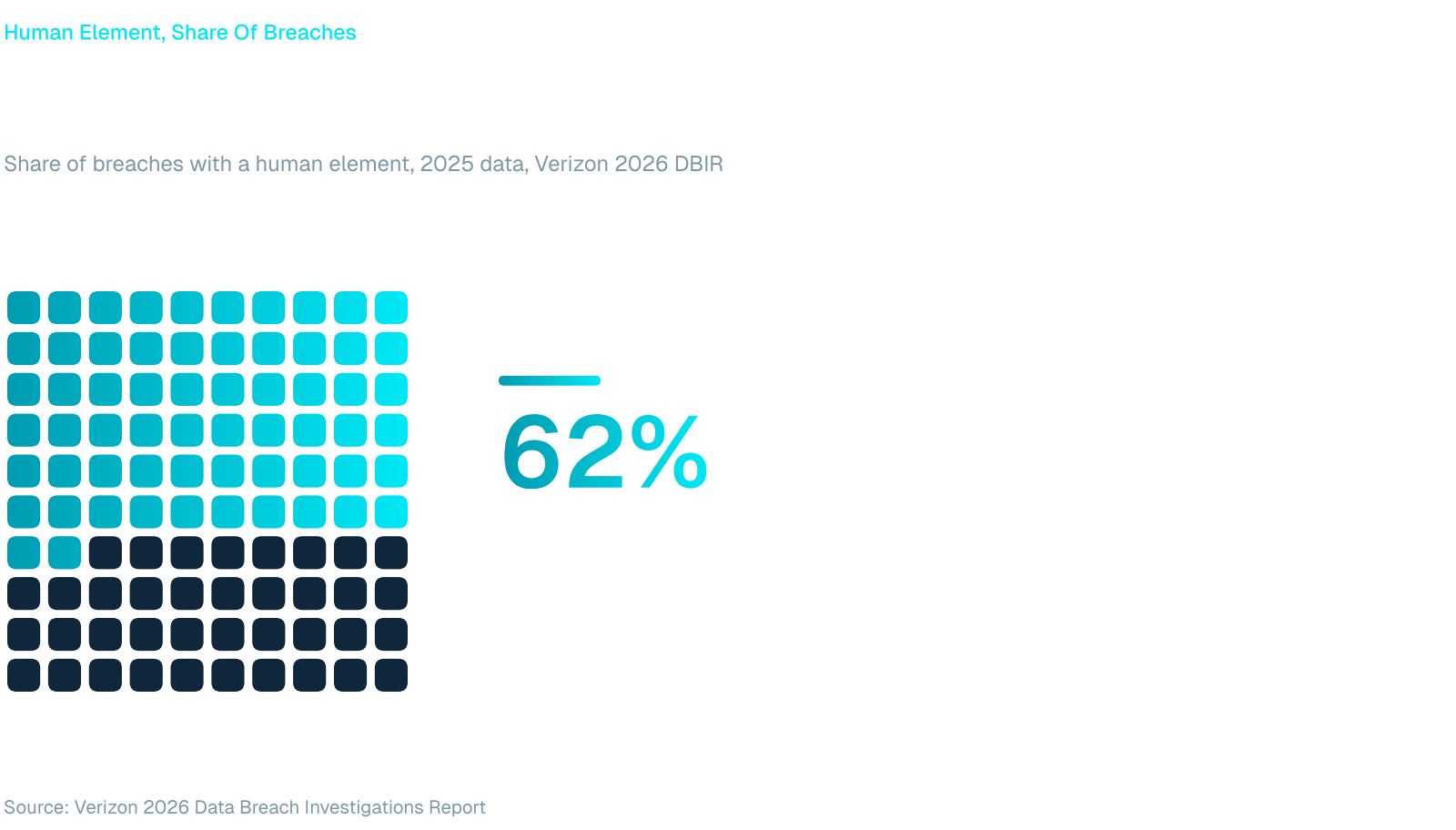
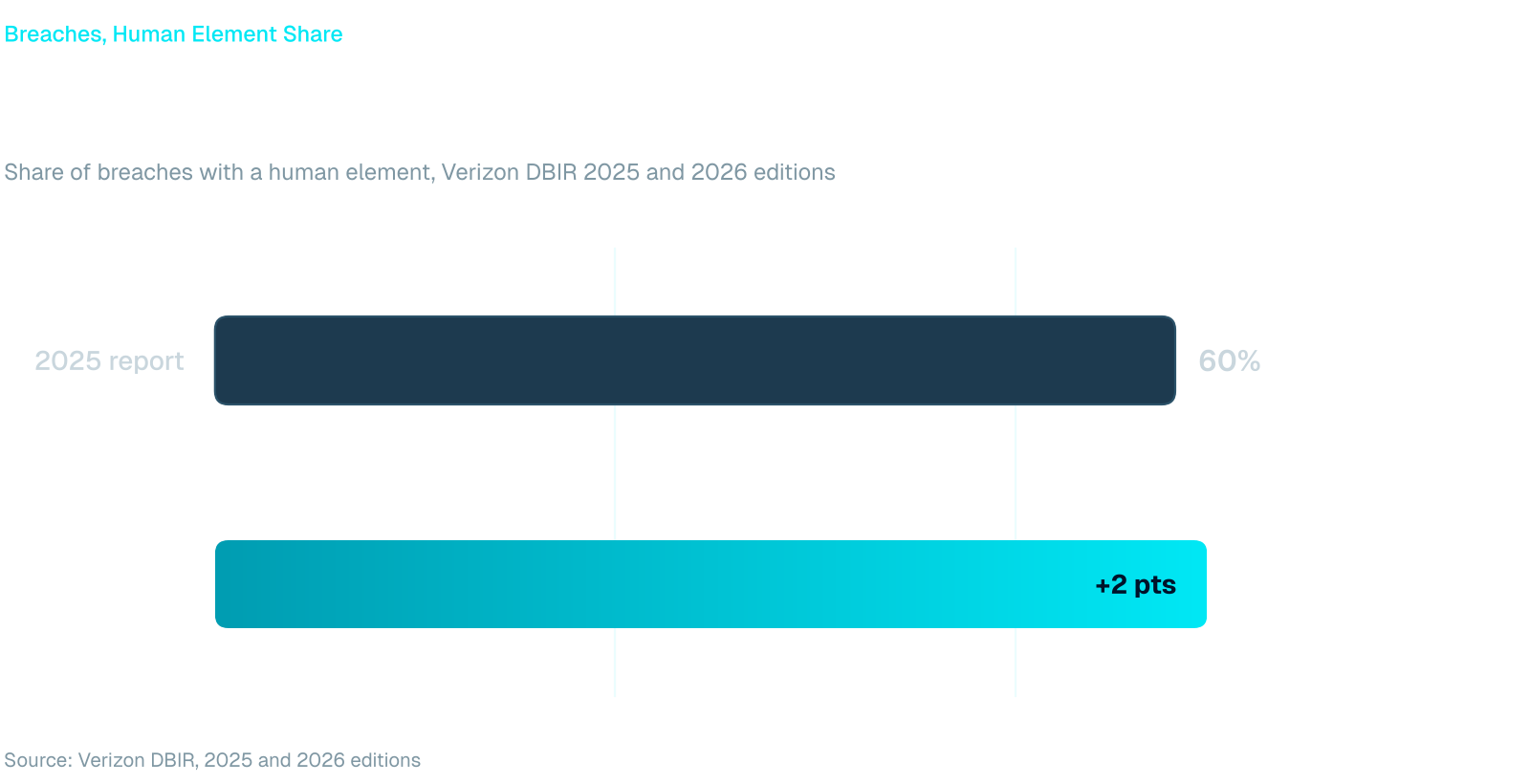
That gap matters. The Verizon 2026 Data Breach Investigations Report puts the human element in 62% of breaches, up from 60% in the 2025 edition, as Infosecurity Magazine reports. Behavior between yearly courses is where that risk builds, and a patchwork cannot see it.
A platform worth buying covers five jobs in one place: training in the language people work in, simulation of the attacks they will meet, risk scoring per person, automatic action on that score, and delivery where staff already work. The rest of this guide takes them in turn and names the Fraus product behind each.
Training in Arabic and English
A cybersecurity awareness training platform starts with the lesson. Codex delivers security awareness training in Arabic and English, so a warehouse supervisor and a finance director each learn in the language they work in. Whether the Arabic was authored or translated is worth testing, and the evaluation below includes that test.
Codex uses agentic AI-driven micro-learning: bite-sized, targeted lessons built into everyday work, which Fraus's agentic AI recommends or assigns to each person from their training gaps and behavioral signals. Learning paths are role-based, and lessons draw on real-world scenarios, including deepfake awareness, business email compromise, and Shadow AI and GenAI risk.
Nudges and compliance mapping sit in the same product, so the training record and the audit evidence come from one place. For a longer checklist on training alone, see our security awareness training UAE buyer's checklist.
Phishing Simulation Without Gaps
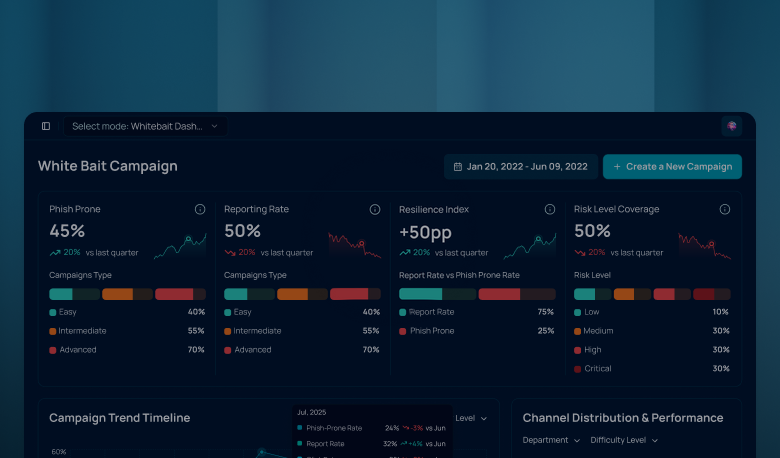
Training tells people what to look for. Simulation shows whether they do it under pressure, and a single template library gets learned by heart. Whitebait runs phishing simulation for UAE and GCC organizations with AI-recommended campaigns, MFA bypass, QR code and credential harvesting scenarios, and Arabic and English templates. It tracks reporting rate next to click rate.
Harder exercises come from Blackbait, whose AI runs OSINT reconnaissance on selected targets and escalates attacks autonomously. Dolus AI Studio turns an email screenshot or prompt into an editable template, so a suspicious message your staff actually received can become an exercise.
Small teams often cannot plan and review campaigns every month. Graybait is the campaign-less option. Setup takes four steps, then it runs for twelve months through agentic AI, choosing each employee's next simulation from their Human Risk Profile, and the team steps in only when the system asks. Our guide to the phishing simulation platform UAE buyers compare goes deeper.
Risk Scoring That Drives Action
Training and simulation produce results. A human risk management platform decides what to do with them. Odin scores each employee's risk continuously, builds individual threat profiles, weights scores by role criticality and escalates automatically. A payments officer and a facilities coordinator can fail the same simulation and still deserve different responses.
A score matters only when something follows it. Agentic Automation Rules take triggers from simulation results, identity, endpoint, data loss prevention, directory, training and risk score events, and assign nudges, modules, videos, policies or posters. They can also notify role groups or the employee's manager. Higher-stakes actions such as step-up MFA or a finance approval hold always wait for analyst approval, and every agentic action is logged for audit.
The response to a click is the clearest test of the whole chain. Zero-Touch Training delivers just-in-time coaching: when someone shows a risk, Fraus responds at once with training matched to the behavior, inside Microsoft Teams, with no manual step.
Reach, Tenancy and Deployment
Staff rarely open a separate portal by choice. The Fraus Teams App shows Odin risk scores, one-tap phish reporting, policy acknowledgement and micro-training inside Microsoft Teams, so reporting a suspicious message takes one tap.
For managed providers and groups with several entities, Multi-Tenant and MSSP gives each client or entity a separate environment, with approval workflows and an audit trail.
Hosting decides many UAE purchases. Fraus is built in Dubai, can be hosted on UAE or GCC servers or deployed fully on-premise, holds ISO/IEC 27001 certification and UAE Information Assurance (UAE IA) compliance, and is aligned with the NIST Cybersecurity Framework. Any security awareness platform UAE procurement teams shortlist should state its hosting and certifications in writing.
Evaluate Against Your Own Week
A demo shows a product on its best day. Build the evaluation from your own week instead, give every shortlisted platform the same tasks, and score the results:
- Open a lesson as an Arabic-speaking employee and judge whether it reads as written for Arabic.
- Set up one simulation for finance and one for a general role, and check that the lures differ.
- Let a test user click, and time how long coaching takes to arrive.
- Ask where the risk score comes from and what it triggers.
- Request hosting options and certification evidence in writing.
- Ask how a second entity or client would be added.
Then ask who has to keep it running. A platform that needs an administrator to launch every campaign and read every dashboard drifts once attention moves elsewhere. One that acts within guardrails keeps going, which is the design of Graybait and the automation rules above.
Go back to the patchwork from the start. List the tools your program uses today and mark which of the five jobs each one covers. Where two tools cover one job, or none covers it, you have your first evaluation question. Then ask for a Fraus walkthrough starting from Codex and your own list.
Frequently Asked Questions
What should a cybersecurity awareness platform include?
At minimum: training in the languages your staff use, phishing simulation, per-person risk scoring, automation that acts on that score, and reporting for audit. Add delivery inside the tools staff already use, support for multiple entities if you manage clients, and hosting that meets your data location rules. Fraus covers these through Codex, Whitebait, Odin, Agentic Automation Rules, the Teams App and its deployment options.
Is one platform better than separate tools?
Separate tools each hold part of a person's story. A click in a simulation, a missed lesson and a role with payment authority only add up when one system sees all three. One platform lets the risk score drive training and escalation without manual exports, and it gives the security team a single place to report from.
Can the platform run on UAE servers or on-premise?
Yes. Fraus can be hosted on UAE or GCC servers or deployed fully on-premise. It is available in Arabic and English, holds ISO/IEC 27001 certification and UAE IA compliance, and is aligned with the NIST Cybersecurity Framework. Ask any shortlisted platform for the same facts in writing, including where each component is hosted.
How does a human risk management platform differ from awareness training?
Training delivers lessons. A human risk management platform also measures each person's behavior, scores risk by role and exposure, and responds with training, policies or escalation. Odin does this in Fraus. Our post on human risk management vs security awareness training sets out the difference in more detail.