
Adaptive Social Engineering Engine

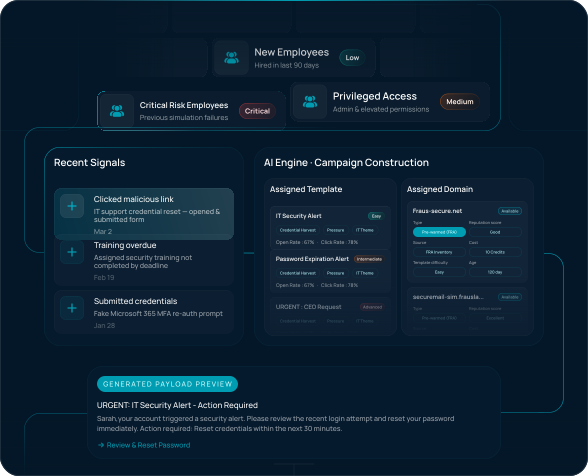
Context-aware phishing simulation that leverages OSINT data & behavioral signals to generate highly relevant, sophisticated & adaptive campaigns using modern attack tactic & techniques.

Leverages behavioral analytics and gathered intelligence to create adaptive scenarios that mirror current threat landscapes, such as Quishing, MFA bypass, and credential harvesting - ensuring simulations mirror real-world attack sophistication and relevance.

Adaptive Social Engineering Engine

Why Traditional Phishing Simulation Is Outdated

Static, template-driven programs no longer reflect how modern social engineering actually works.

Outdated Templates

Outdated Templates

Legacy simulations rely on fixed templates that fail to reflect modern tactics such as QR phishing, MFA-bypass flows, and AI-enabled impersonation.

Manual Overhead

Manual Overhead

Program administration remains unnecessarily resource-intensive, requiring significant time to build, launch, and maintain campaigns.

Predictable Simulations

Predictable Simulations

Employees tend to memorize training signals, creating false confidence while real attacks slip through.

Limited Business Context

Limited Business Context

Scenarios are rarely grounded in how the organization operates, making simulations less credible and less relevant to actual risk.

No AI Adaptation

No AI Adaptation

Defenders remain static, while threat actors leverage AI at scale. Defenders remain static, while threat actors leverage AI at scale.Defenders remain static, while threat actors leverage AI at scale.

Low Engagement

Low Engagement

Repetitive, generic training that users learn to ignore over time. Repetitive, generic training that users learn to ignore over time. Repetitive, generic training that users learn to ignore over time.

How Fraus Solves This

AI that learns from every interaction, adapts to every challenge, and grows stronger with your workflow — so you're always one step ahead.

01

Modern Attack Techniques

Models modern social engineering techniques, including QR phishing, MFA-bypass flows, liquid/direct attacks, and AI-enabled impersonation using LLM-powered scenario generation.

One Step
Ahead of Deceit

Zero-Touch Defense Against Human Risk

01

Business Context Awareness

Uses agentic AI to understand your business, operating environment, and organizational context to generate scenarios that feel relevant, credible, and context-aware.

One Step
Ahead of Deceit

Zero-Touch Defense Against Human Risk

01

OSINT & Threat-Informed Realism

Combines OSINT, organizational signals, and threat intelligence to create high-fidelity lures, messaging, and attack narratives grounded in real-world attacker workflows.

One Step
Ahead of Deceit

Zero-Touch Defense Against Human Risk

01

Behavioral Intelligence

Continuously analyzes user behavior, susceptibility patterns, and response history to improve targeting, refine simulations, and strengthen human risk modeling over time.

One Step
Ahead of Deceit

Zero-Touch Defense Against Human Risk

01

Psychological Signal Testing

Evaluates how users respond to authority, urgency, reward, and pressure to measure real decision-making under realistic social engineering conditions.

One Step
Ahead of Deceit

Zero-Touch Defense Against Human Risk

01

Adaptive Personalization

Uses AI-driven personalization to tailor delivery, tone, attack path, and difficulty based on each user’s role, exposure, and behavioral profile.

One Step
Ahead of Deceit

Zero-Touch Defense Against Human Risk

01

Continuous AI Learning

Applies LLMs and agentic AI across generation, targeting, optimization, and outcome analysis, enabling the platform to improve with every campaign cycle.

One Step
Ahead of Deceit

Zero-Touch Defense Against Human Risk

01

Autonomous & Admin-Led Control

Supports both fully autonomous, agentic execution and admin-led campaign control, giving teams flexibility across different operating models and program maturity levels.

One Step
Ahead of Deceit

Zero-Touch Defense Against Human Risk

Modern Attack Techniques

Models modern social engineering techniques, including QR phishing, MFA-bypass flows, liquid/direct attacks, and AI-enabled impersonation using LLM-powered scenario generation.

One Step
Ahead of Deceit

Zero-Touch Defense Against Human Risk

Business Context Awareness

Uses agentic AI to understand your business, operating environment, and organizational context to generate scenarios that feel relevant, credible, and context-aware.

One Step
Ahead of Deceit

Zero-Touch Defense Against Human Risk

OSINT & Threat-Informed Realism

Combines OSINT, organizational signals, and threat intelligence to create high-fidelity lures, messaging, and attack narratives grounded in real-world attacker workflows.

One Step
Ahead of Deceit

Zero-Touch Defense Against Human Risk

Behavioral Intelligence

Continuously analyzes user behavior, susceptibility patterns, and response history to improve targeting, refine simulations, and strengthen human risk modeling over time.

One Step
Ahead of Deceit

Zero-Touch Defense Against Human Risk

Psychological Signal Testing

Evaluates how users respond to authority, urgency, reward, and pressure to measure real decision-making under realistic social engineering conditions.

One Step
Ahead of Deceit

Zero-Touch Defense Against Human Risk

Adaptive Personalization

Uses AI-driven personalization to tailor delivery, tone, attack path, and difficulty based on each user’s role, exposure, and behavioral profile.

One Step
Ahead of Deceit

Zero-Touch Defense Against Human Risk

Continuous AI Learning

Applies LLMs and agentic AI across generation, targeting, optimization, and outcome analysis, enabling the platform to improve with every campaign cycle.

One Step
Ahead of Deceit

Zero-Touch Defense Against Human Risk

Autonomous & Admin-Led Control

Supports both fully autonomous, agentic execution and admin-led campaign control, giving teams flexibility across different operating models and program maturity levels.

One Step
Ahead of Deceit

Zero-Touch Defense Against Human Risk

Adaptive Social Engineering Engine

Two powerful products, driven by one intelligent engine built to find, simulate, and eliminate threats across every attack surface your organization faces.

Blackbait

FULLY AUTONOMOUS

Blackbait

Replicates how a real attacker would operate by using OSINT to gather context, generate the scenario, target the user, and execute the simulation with no admin input.

  • Exposes how employees respond to realistic, attacker-style threats.
  • Removes administrative burden from continuous simulation programs.
  • Increases realism through context-driven targeting.
  • Helps uncover risk that scripted campaigns often miss.
Explore Blackbait
Whitebait

ADMIN-CONTROLLED

Whitebait

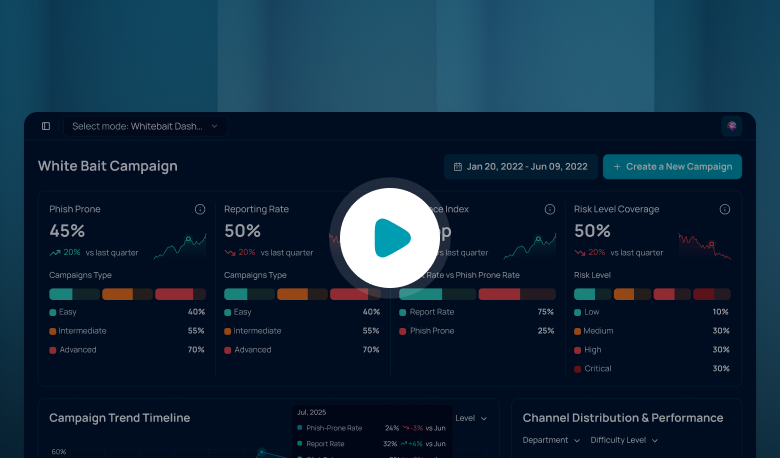
Gives security teams full control over campaign creation and execution, with stronger templates, richer metrics, and optional AI-generated campaigns when needed.

  • Enables precise control over campaign design, timing, and execution.
  • Supports more tailored simulations across teams, roles, and environments.
  • Raises program quality with stronger scenarios and better content.
  • Delivers more meaningful visibility into engagement and outcomes.
Explore Whitebait

Measurable Reduction in Human Risk

Fraus helps organizations reduce user susceptibility, strengthen threat recognition, drive sustained behavior change, and improve risk visibility over time.

Lower Susceptibility

Lower Susceptibility

Fewer users fall for realistic, adaptive simulations as exposure and resilience improve over time.

Stronger Threat Recognition

Stronger Threat Recognition

Users become better at identifying, escalating, and reporting suspicious activity across attack scenarios.

Fewer Repeat Failures

Fewer Repeat Failures

High-risk users show sustained improvement through targeted, continuously adaptive reinforcement.

Actionable Risk Visibility

Actionable Risk Visibility

Risk insights give security teams a clearer view of overall risk across the organization based on modern threat landscape.