




A security awareness manager on a lean team cannot hand-build a different phishing simulation for every employee, so most programs settle for one campaign to everyone each quarter. Automated phishing simulation closes that gap when the automation covers the right things. This post is for the people who own the program in a GCC organization and decide what to automate and what to keep.
In short: Automation should mean AI that picks each employee's next simulation all year from their role, behavior and difficulty level, while your team keeps policy, consent, escalation and review. A lean GCC team can then run a continuous program in Arabic and English.
What Automated Phishing Simulation Should Mean
A scheduler automates the calendar. It sends the same template to the same group on a fixed date and reports the result afterward. That saves effort, yet every person still gets the same difficulty on the same day, whatever their role or history.
Automation worth the name also takes over the decisions about who is tested next, which lure fits their work, how hard it should be and what happens after they click or report. A lean team never has time to make those decisions for every person, and an AI can make them continuously.
NIST's Phish Scale shows why those decisions matter. It rates how hard a phishing email is for a person to detect, based on the cues in the email and how well its premise fits the recipient's work and responsibilities (NIST phishing research). The same email can be easy for one group and hard for another. That is the reason to automate the choosing as well as the sending.
Cadence matters too. Verizon's 2026 Data Breach Investigations Report found the human element present in 62% of breaches and phishing the initial access vector in 16%, the same share as the year before (Verizon 2026 DBIR). In phishing simulations, it found the median successful click rate for mobile-centric vectors such as voice and text to be 40% higher than for email.
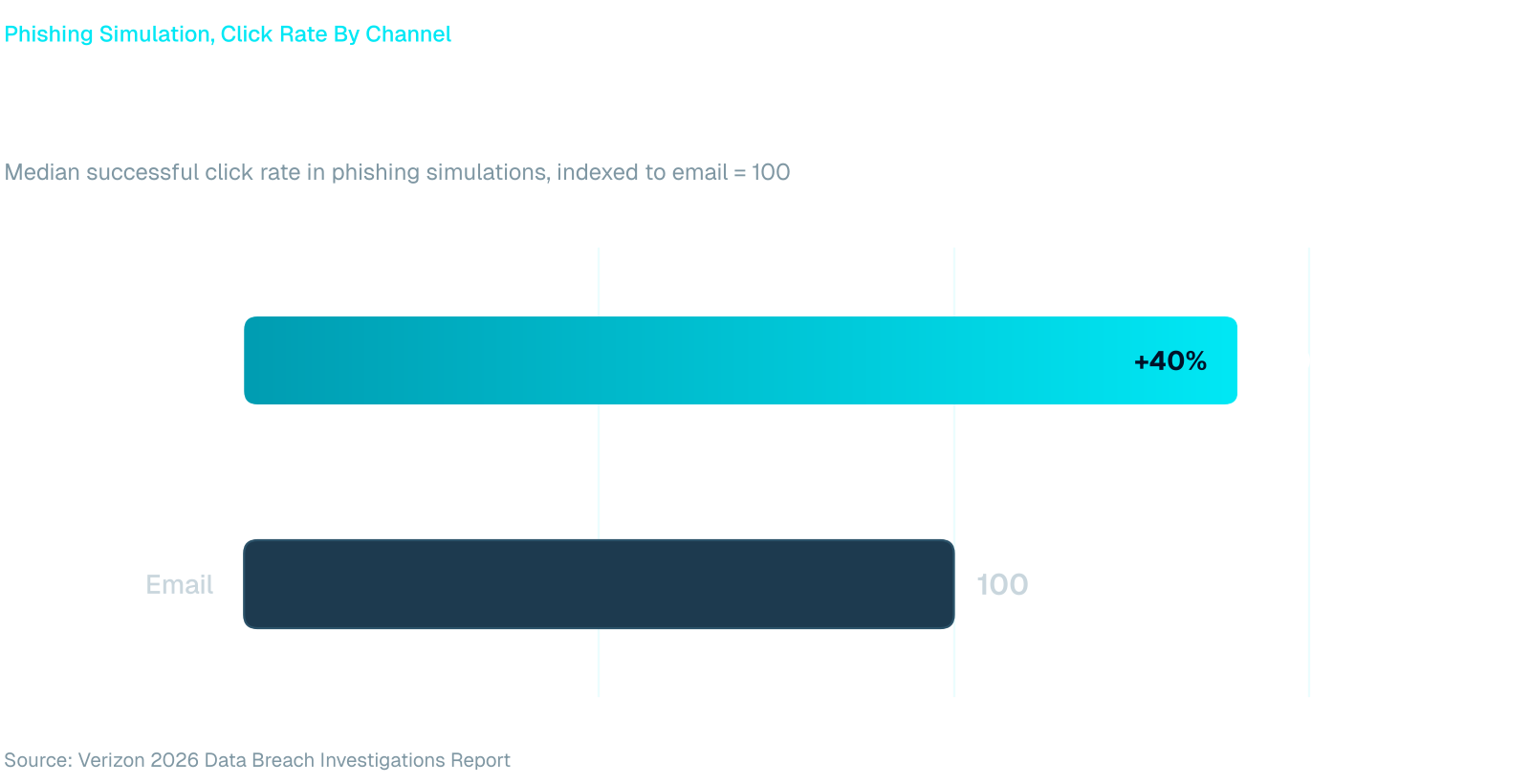
Employees meet lures on their phones as well as in the inbox. A once-a-quarter send samples that exposure a few times a year, and a program that runs all year keeps sampling it.
What the AI Runs All Year
Graybait, our automated phishing simulation, works from a simple split. You set the policy and guardrails once, and agentic AI picks each employee's next simulation all year from their Human Risk Profile. In practice, that covers the following for every person.
- Which simulation each person receives next, picked from their Human Risk Profile.
- A new pick for every employee throughout the year, instead of one campaign each quarter.
- Every pick made inside the policy and guardrails your team set once.
One policy governs the whole program, and the AI applies it person by person. A new finance hire and a long-serving operations engineer each get a simulation picked from their own profile, and neither waits for a calendar date. That is how automation and personalization work together.
What Your Security Team Keeps
Automation changes the team's job from sending campaigns to owning the rules. Four of those rules stay with people.
Guardrails. Write down who is in scope, how difficult a lure may become, how often one person can be tested and which themes are off limits. Themes that exploit grief, illness, pay cuts or job losses harm trust in the program and should be ruled out. The AI works inside those limits.
Consent. Tell employees that the program exists, what it measures and who sees individual results. Put this in the acceptable-use policy and in onboarding, and agree the wording with HR and legal against your data protection obligations. Employees know the program exists, and each lure still arrives unannounced.
Escalation. Odin, our human risk management platform, scores each person's risk continuously, escalates automatically and can recommend or assign training, supervised or unsupervised. Choose the mode, starting supervised and moving to unsupervised once you trust the pattern, and write the escalation ladder into the program policy. Decide now that a simulation result is a coaching signal and never a disciplinary action on its own.
Review. Meet monthly to check the lure set against what employees are reporting, the spread of difficulty, any exemptions and results by role group. Keep short notes on what changed and why. Monthly is a workable rhythm for a lean team, and the notes become your record when an auditor or the board asks how the program is run.
How This Works for GCC Organizations
Teams in the GCC often work across Arabic and English, and a lure in the wrong language tests language comfort as much as judgment. A simulation should reach each person in the language they work in, with themes that match the region.
Local threats set those themes. Earlier this year the UAE Cyber Security Council, with Emirates Post Group and the Darb platform, warned of a surge in online fraud through SMS, WhatsApp and email, using suspicious links and fake discounts (Gulf News). The Council has also advised the public not to scan QR codes in public or untrusted locations and to report suspicious messages (Gulf News).
Reporting is the behavior to build. Review your lure set against these themes each month, ask employees to report what they see, and watch how quickly the first report arrives.
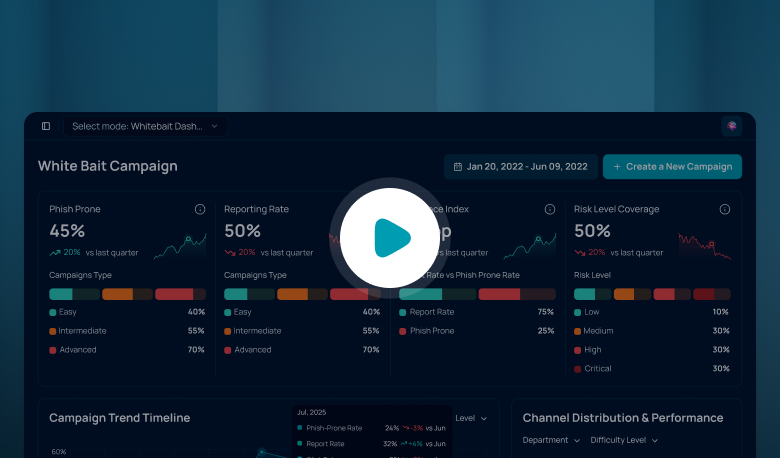
Fraus is built in Dubai and runs in Arabic and English, and Whitebait, our phishing simulation, includes Arabic and English templates and QR code scenarios. We can host on UAE or GCC servers or deploy fully on-premise. Per-person click and report histories are sensitive data about your own staff, so ask every platform you assess where that data sits and whether it can run inside your environment.
Regulators. In Saudi Arabia, the NCA's Essential Cybersecurity Controls (ECC-2:2024) apply to government entities and to private sector owners, operators and hosts of critical national infrastructure (NCA ECC). Control 1-10-3 requires the awareness program to cover the most important and latest cyber risks, with secure handling of email, especially phishing emails, among the topics. Control 1-10-5 requires the program's implementation to be periodically reviewed and sets no frequency.
A program that runs all year gives you live material for control 1-10-3 and a record of results and changes for control 1-10-5. If another framework applies to you, read its awareness requirements the same way.
Measure What Changes
A lean team needs a short list of measures that show behavior moving.
- Reporting rate, read alongside click rate.
- Time to the first report after a simulation lands.
- Repeat behavior, meaning who clicks again after coaching and who stops.
- Click rate read against the difficulty of the lure.
- Share of employees who have received a simulation this quarter.
Click rate alone moves with the lure, and NIST built the Phish Scale to give program staff context for it. Present trends by role group and keep individual results inside the program team, where coaching happens.
Write the Policy First
Before you assess any platform, draft a one-page policy covering scope, difficulty ceiling, test frequency per person, off-limits themes, the escalation ladder and the owner of the monthly review. Automation then has something to enforce. Graybait takes that policy once and runs the program from there, all year.
Frequently Asked Questions
How does automation work alongside personalization?
Your team writes the policy once, covering scope, limits, consent and escalation. The AI applies it to every employee and chooses each person's next simulation from their Human Risk Profile. The program runs automatically, and each person still receives a simulation matched to their role and behavior. You edit the policy when your risks change, not each campaign.
Does the AI keep its simulations up to date?
The AI picks each person's next simulation from their Human Risk Profile throughout the year, rather than from a schedule fixed months earlier. Your team keeps the lure set current with what employees report and what authorities warn about. Dolus AI Studio turns an email screenshot or a prompt into an editable phishing simulation template, so a message reported last week can become a template for the next round.
Are AI-powered simulations more effective?
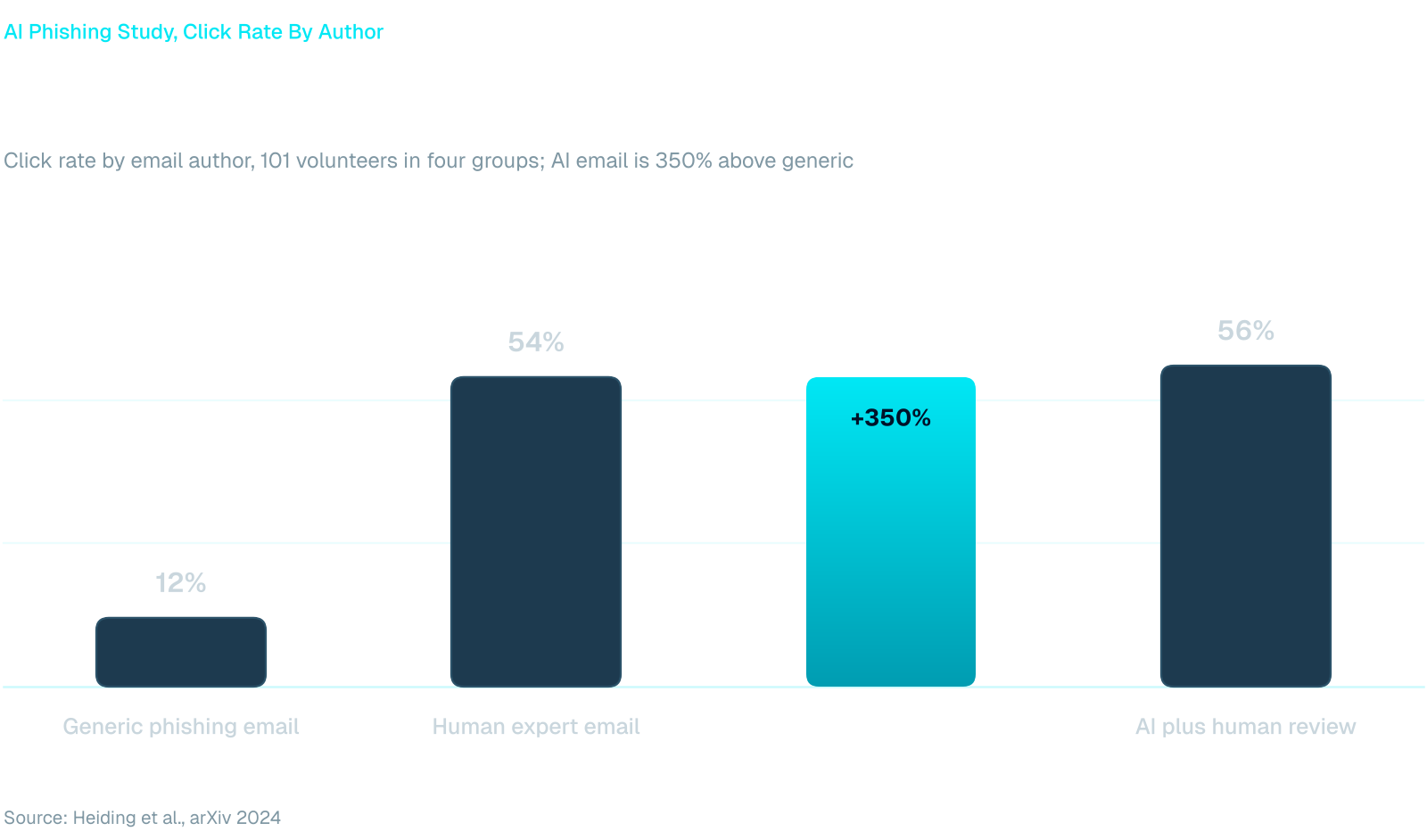
They fit each person, and fit is what makes a simulation worth running. An AI-powered program matches each simulation to the employee's role, behavior and difficulty level, in the language they work in, which a lean team cannot do by hand for a whole workforce. Judge it on your own reporting rate, time to report and repeat clicks, read against lure difficulty.
Can automated phishing simulation run on our own servers?
Yes. Fraus can be hosted on UAE or GCC servers or deployed fully on-premise, so individual risk data stays where your policy requires. It is available in Arabic and English, holds ISO/IEC 27001 certification and UAE Information Assurance (UAE IA) compliance, and is aligned with the NIST Cybersecurity Framework.