
Higher Education Cybersecurity Solutions & Training

Higher Education Cybersecurity Solutions & Training

Universities are open by design: large numbers of staff and researchers, public faculty pages, international partners, and an academic calendar that attackers can predict. Fraus measures human risk across faculties and administrative units, runs simulations themed around university life, and delivers training in English and Arabic that fits around teaching and research.

Universities in the UAE and GCC Are on the Target List

In August 2026, the UAE Cyber Security Council named education among the sectors hit by coordinated attacks it had thwarted, alongside aviation and energy. Targeted phishing was among the methods. CrowdStrike analysis reported by AGBI found that organizations in the Middle East accounted for 8 percent of academic-sector targeting observed worldwide between July 2025 and June 2026, and described an espionage group tracked as Static Kitten sending spear-phishing emails designed to get university staff to open malicious files.

The Council has also warned schools, universities, and families about fake messages that impersonate educational institutions and ask people to update their details or move to unofficial platforms, particularly during periods of remote learning.

Universities run on openness: published faculty directories, shared research platforms, and a population that changes every term. That openness is what a university is for, and it is also what makes targeted phishing so easy to write.

Case Study

The Mabna Institute Campaign Against Universities

01

What Happened

Starting around 2013, operators affiliated with a Tehran-based company called the Mabna Institute sent spear-phishing emails to more than 100,000 university professors around the world. According to the US indictment unsealed in March 2018, about 8,000 accounts were compromised at 144 universities in the US and 176 universities in 21 other countries, and more than 31 terabytes of academic data and intellectual property were stolen.

Proofpoint researchers found that most lures were themed around library access and led to convincing clones of university library and portal login pages. The campaigns continued after the indictment.

02

Where It Turned on a Person

The page they landed on carried their own university's name, colors, and layout. Nothing about it looked foreign, because it was built to be a copy, and nothing about the request looked unusual, because renewing access to the library is something a researcher does several times a year without a second thought. The lure did not try to alarm anyone. It slipped a login prompt into a routine the person already trusted.

That is what made it effective. Faculty members log into portals constantly, and the habit of typing a password into a familiar-looking screen is so well practiced that it runs below the level of conscious attention. The attackers borrowed the institution's own identity, and the people who fell for it were not careless. They were doing exactly what they do every working day.

03

How Fraus Would Have Helped

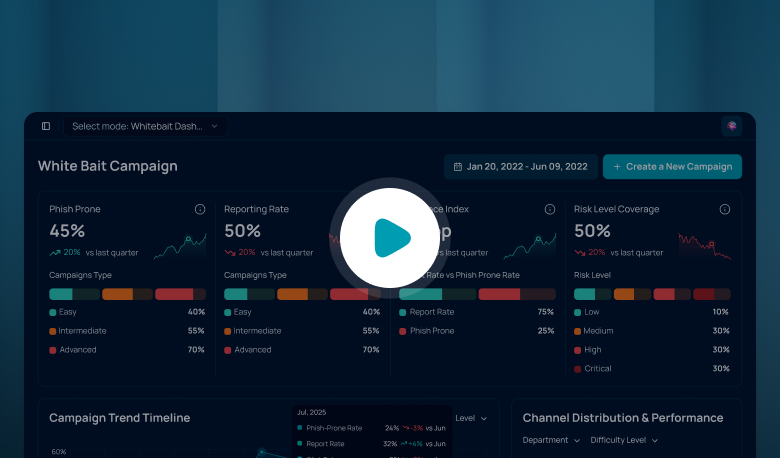
Faculty need to see a cloned login page before an attacker shows them one. Whitebait runs credential harvesting simulations, and Dolus AI Studio can rebuild a real phishing email that reached your staff from a screenshot, so simulations mirror the lures already arriving on your campus.

Not every account carries the same risk. Odin includes role, privileges, and criticality in each score, so researchers with access to sensitive data or valuable intellectual property are weighted accordingly, and risk can be compared across faculties and administrative units.

Fraus measures how many staff report a simulated lure as well as how many click it, which shows whether people are flagging suspicious messages and not only avoiding them. Codex delivers training in English and Arabic for the international academic communities common across UAE and GCC campuses, including modules on Shadow AI and GenAI risk for research teams adopting new tools.

Each of the 8,000 compromised accounts began with one person trusting a familiar login page. Fraus trains staff to question that page before they type, and shows you which faculties have learned to.

The Fraus Platform for Higher Education

Whitebait

Whitebait

Admin-led campaigns with AI recommendations, calibrated difficulty levels, and multi-language delivery including Arabic.

Explore

Dolus AI Studio

Dolus AI Studio

Turn a screenshot of a phishing email that reached your staff into an editable simulation template in seconds, so training reflects the lures your campus really receives.

Explore

Codex

Codex

Micro-learning in English and Arabic, with Shadow AI and GenAI risk modules for research teams adopting new tools, plus business email compromise and deepfake awareness.

Explore

Odin

Odin

Individual and departmental risk views, with automatic escalation for high-risk users.

Explore

Questions University Security Teams Ask

Will simulations clash with teaching and exam periods?

You control when Whitebait campaigns run, and Codex modules are short enough to complete between classes and meetings.

Can we use phishing emails our staff have already received?

Yes. Dolus AI Studio rebuilds a screenshot of any email as an editable template and keeps its layout and tone.

Is training available in Arabic?

Yes. Codex provides full English and Arabic support, and Whitebait runs campaigns in Arabic.

How does Fraus treat researchers who handle sensitive data?

Odin includes role, privileges, and criticality in each risk score, so researchers with access to sensitive data or valuable intellectual property are weighted accordingly.