


A firewall rule list shows which ports are open. Most security teams have no equivalent view of the people who hold payment approvals, admin rights or the executive inbox, yet attackers reach them by email, text and chat every day. This post is for CISOs in the UAE and GCC who want human attack surface management to work like the rest of their exposure program: an inventory, a measure and a plan to shrink it.
In short: Human attack surface management maps who attackers can reach, what each person could expose if compromised, and how they behave under attack. Measure that exposure by role, then reduce it with targeted simulations, just-in-time coaching and controls instead of one annual course.
What the Human Attack Surface Includes
NIST defines an attack surface as the set of points on the boundary of a system where an attacker can try to enter, affect it or extract data. People sit on that boundary. A mailbox, a phone number, a Teams account and an approval right are all points an attacker can try.
Reach. Every employee with a public email address, a listed phone number or a LinkedIn profile can be contacted. Reach is wider than most teams assume, because it also covers text messages, voice calls and chat, not only email.
Privilege. Reach matters most when it connects to something valuable. A finance officer who releases payments, an IT administrator and an executive assistant who manages a calendar and a mailbox for someone senior each give an attacker far more than a new starter does.
Behavior. The third part is what a person does when a lure arrives: click, enter a code, approve a prompt, or report it. This is the part that changes over time, which is why a static list of roles is only the starting point.
Human Attack Surface Management Step by Step
With those three parts in view, the work looks like any other exposure program. You build an inventory, rank it, act on the top of the list and measure again. The difference is that the assets are people, so the method has to respect how work actually happens in each role.
- Inventory. List every employee, contractor and shared mailbox from your directory, with department, role and manager.
- Weight by privilege. Mark who can move money, change access, handle sensitive data or speak for the organization.
- Observe behavior. Collect simulation results, reporting, training activity and identity or endpoint events per person.
- Act on the highest exposure first. Assign the right simulation, lesson or control to the people where reach, privilege and behavior meet.
- Re-measure. Compare exposure after each change, per role, not only across the whole company.
Steps one and two are a one-time effort that you refresh when people join, move or leave. Steps three to five repeat continuously, which is where most programs stall, because someone has to read the data and decide what happens next.
Measuring Human Exposure by Role
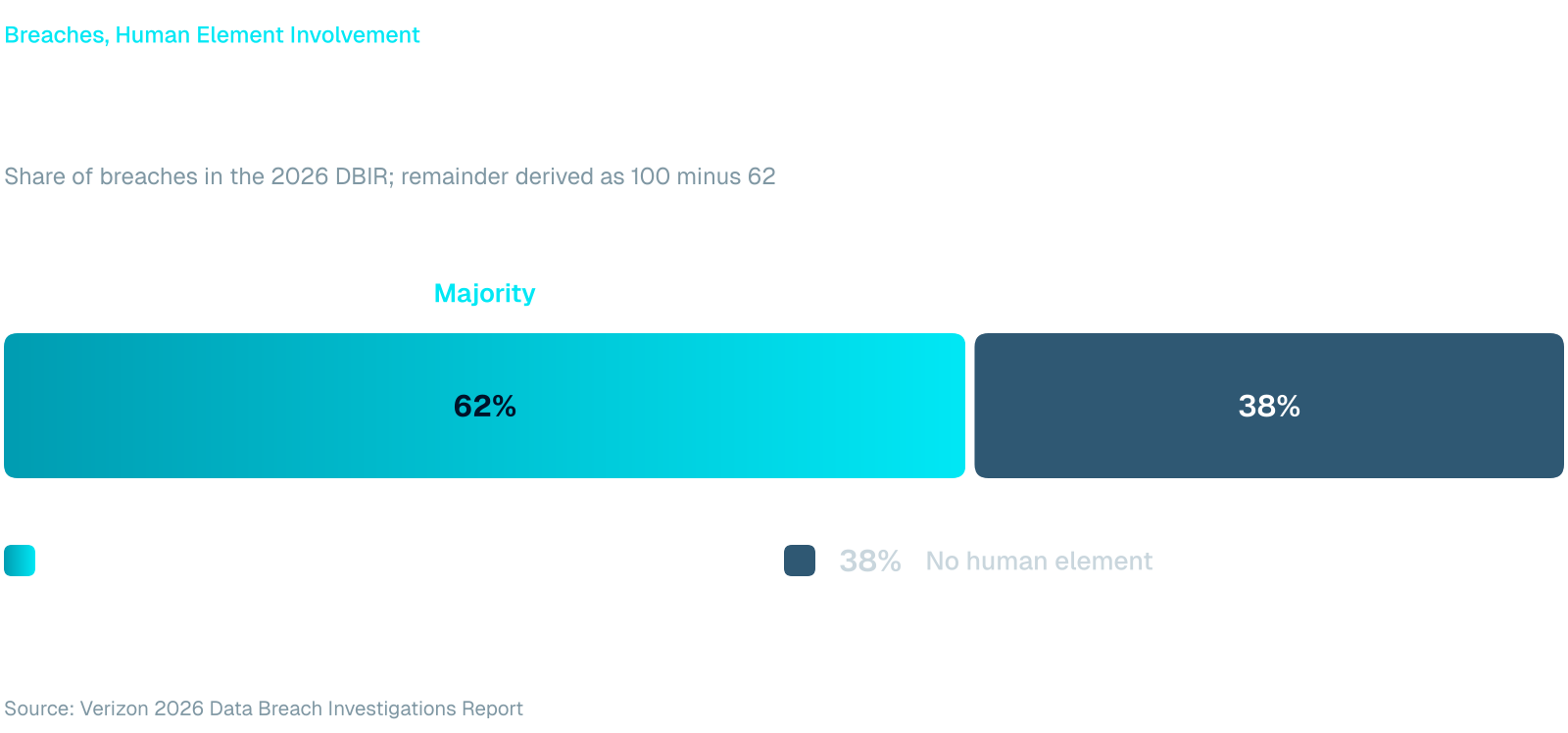
The case for measuring people is well supported. The 2026 Verizon Data Breach Investigations Report found the human element present in 62% of breaches. Vulnerability exploitation is now the most common way in, starting 31% of breaches, yet people are still involved in most of them.
A figure like that is useful for the board, but it cannot tell you where to start. For that you need exposure per person, rolled up by role and department, with the three inputs from earlier: how reachable the person is, how much they can access and how they behave. Our posts on the human risk score and the human risk assessment method cover how to build those inputs.
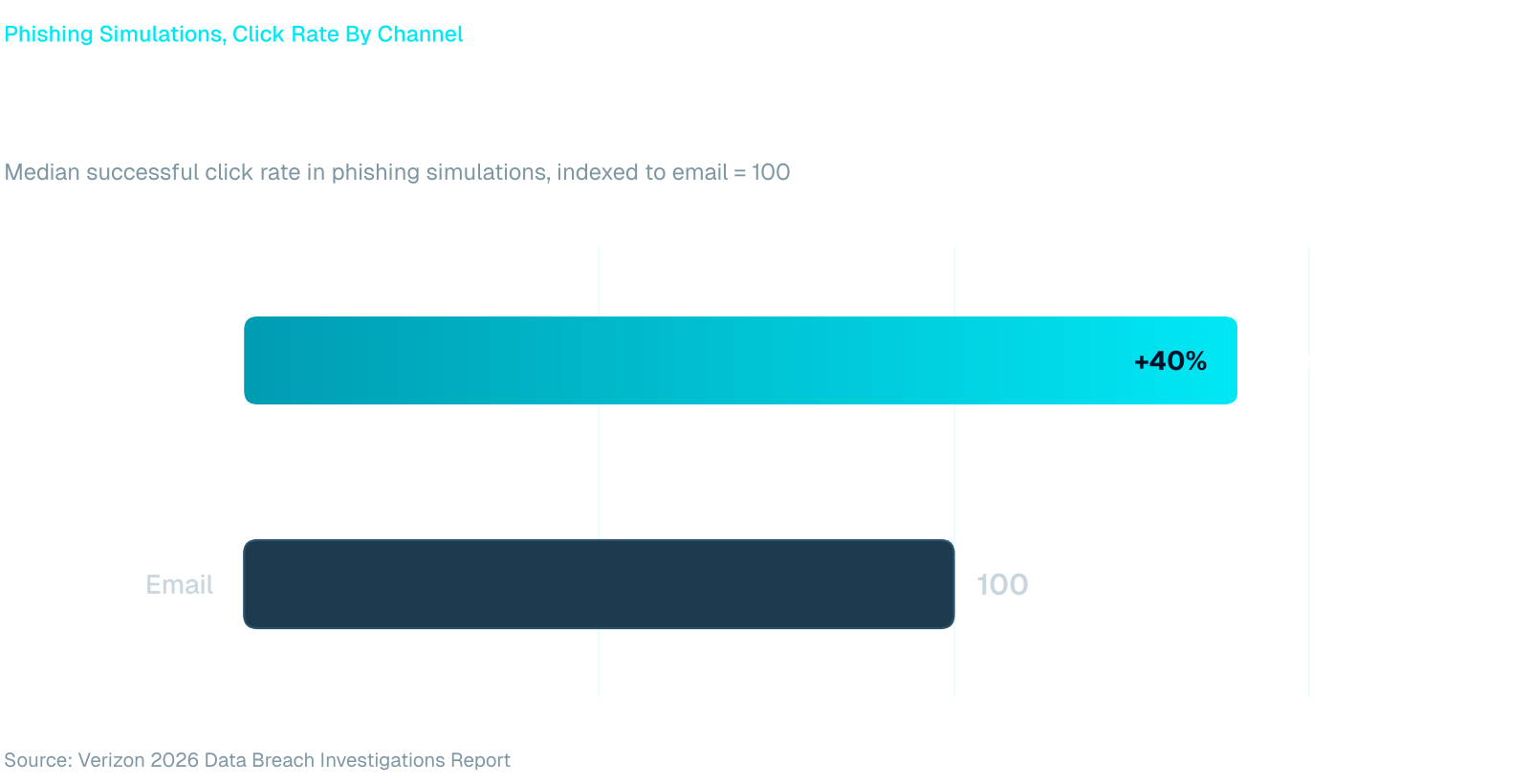
What belongs in an exposure view is the channel as well as the person. The same report found that in phishing simulations, the median rate of successful clicks over mobile vectors such as voice and text was 40% higher than over email. A person who handles email well may still be exposed on the phone, which is why smishing and vishing practice belong in the same measurement.
New channels add exposure too. Verizon also reports that regular use of AI tools among employees rose from 15% to 45% in a year. Each unsanctioned tool is another place where data can leave, which we cover in Shadow AI risks.
What to report. Give leadership exposure by role group, the reporting rate and time to report next to the click rate, and repeat behavior over time. Those show whether exposure is falling where it matters, rather than whether a course was completed.
Reducing Exposure Without Adding Workload
Once exposure is ranked, the aim is to remove it from the top down. In practice that means each person gets what their own profile calls for. Odin scores risk continuously per employee, weights it by role criticality and escalates automatically, so the highest-exposure people surface without a manual review.
Simulation is the next lever. Graybait runs a campaign-less phishing program through agentic AI, choosing each person's next simulation from their Human Risk Profile and raising difficulty as they keep spotting attacks. That suits teams that cannot plan and review campaigns for every role.
Response speed matters as much as practice. With Zero-Touch Training, a person who shows a risky behavior receives matched coaching inside Microsoft Teams straight away, which closes the gap between exposure and response.
For events that need more than a lesson, Agentic Automation Rules turn triggers such as identity, endpoint or simulation events into actions. Higher-stakes actions, such as step-up MFA or a finance approval hold, always wait for analyst approval, so people stay in control of the decisions that carry weight.
Human Exposure Management in the Wider Program
Security teams already track exposure for devices, cloud accounts and applications. Human exposure management adds people to that same picture, so one report can show where an attacker is most likely to get in, whether the entry point is a server or an employee. Human threat exposure management narrows this to the threats that are actually reaching your people, such as the lures they receive and the channels they arrive on.
This is also where the program connects to governance. The UAE Information Assurance (IA) standards include awareness and training among their controls. Exposure data lets you show that the program is aimed at the roles that carry the most risk, and our human risk management framework lays out who owns each phase.
Start With One Role Group
The opening question was how to see the people behind the ports. Pick one role group with high privilege, such as accounts payable or IT administrators, and build its inventory this week. Record who can be reached, what they can access and how they responded to the last simulation.
Set one exposure measure for that group, act on the highest-exposure people first and re-measure after 30 days. Once the group shows a clear trend, extend the same method to the next one. If you want to see how this looks inside a platform, start with Odin.
Frequently Asked Questions
What is the human attack surface?
It is every point where an attacker can reach a person and use that person to get access or data. That includes email, text, voice and chat channels, plus the privileges each person holds. It also includes behavior, because how someone responds to a lure decides whether the contact becomes a breach.
How is this different from human risk management?
Human risk management is the full discipline of scoring, training and responding. Human attack surface management is the exposure lens within it: what can be reached, what it could cost and where to reduce it first. Our guide to the framework covers the wider program.
How often should exposure be re-measured?
Continuously, since behavior and roles change all the time. A once-a-year snapshot is out of date by the next reorganization or new hire. Per-person scoring that updates from simulation results and behavioral signals keeps the view current, and a monthly review by role group is a workable rhythm for reporting.
Which roles should be mapped first?
Start with the roles that can move money, change access or handle sensitive data: finance, procurement, IT administrators, executive offices and their assistants. These combine high privilege with frequent outside contact. Our post on role-based training shows how to tailor the response by role.