




In April 2026 the UAE Cyber Security Council told the Emirates News Agency that more than 75 percent of cyber breaches begin with phishing emails. For a CISO or security awareness manager, that figure turns into a practical question at budget time: which phishing simulation UAE teams can run in the languages their staff read, on servers that fit their data rules. This guide is for the person who has to choose one.
In short: Choose a phishing simulation that runs in Arabic and English, can be hosted in the UAE or on-premise, covers MFA bypass, QR code and credential harvesting scenarios, and reports how many people report a lure, not only how many click.
Why Generic Campaigns Fall Short
Verizon's 2026 Data Breach Investigations Report found the human element in 62% of breaches. Its executive summary puts phishing as the initial access vector in 16% of all breaches, 20% in finance and insurance, 20% in public administration and 22% in educational services.
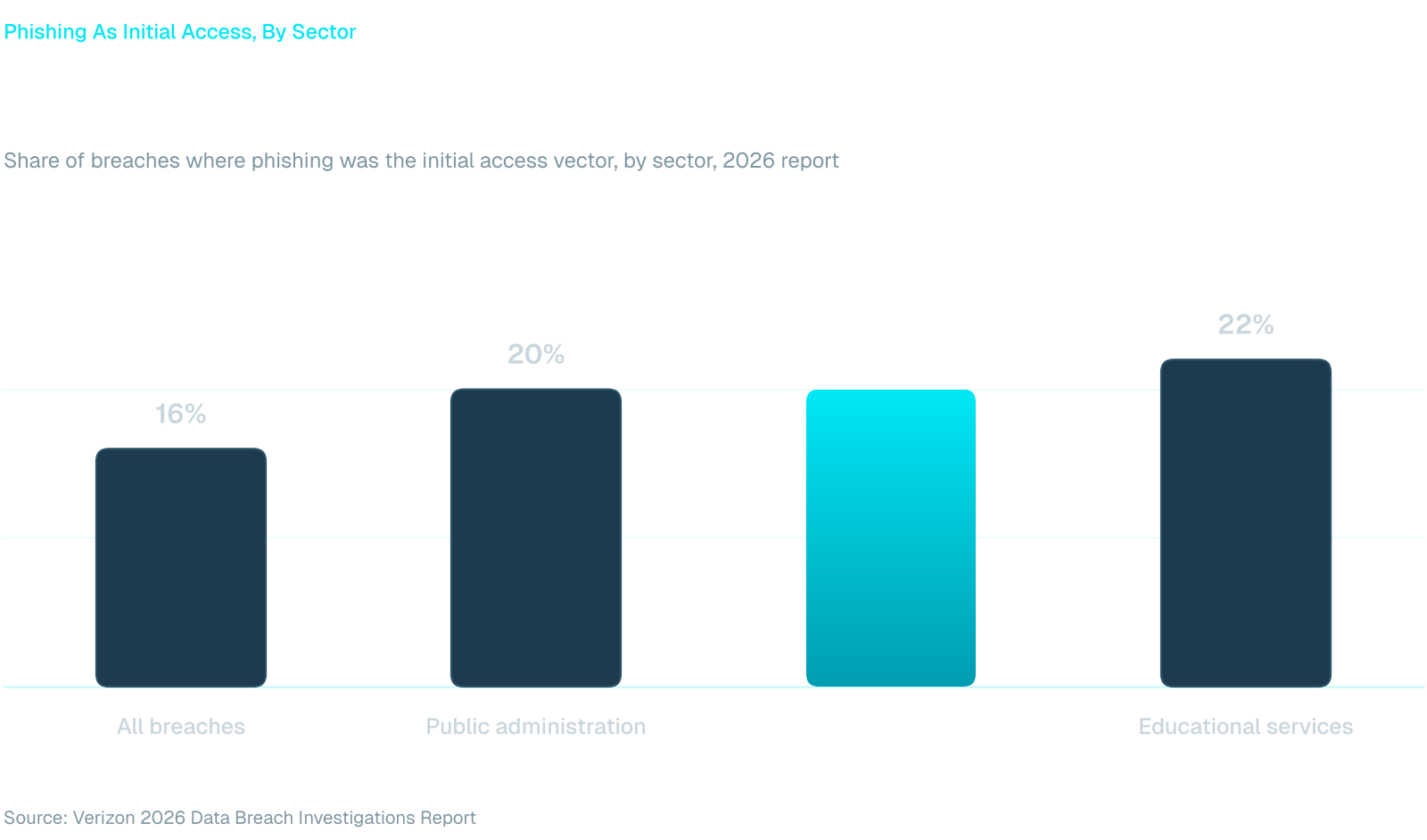
Those sectors cover many UAE buyers, and they share a problem. Staff in the UAE read and write in Arabic and English, often within the same day, so a template library in one language tests only part of the workforce. An accounts payable clerk and a receptionist also face different lures, and a campaign built for one tells you little about the other.
That is the lens to apply when you read a vendor's feature list.
What a Phishing Simulation UAE Buyer Should Check
Five questions separate a platform built for this region from one that was translated for it.
- Languages. Arabic and English templates, with the same scenarios available in both.
- Hosting. UAE or GCC servers, or a fully on-premise deployment, to match your data residency rules.
- Scenarios. MFA bypass, QR code and credential harvesting scenarios, beyond a plain link in an email.
- Targeting. Campaigns matched to each person's role and behavior instead of one send to everyone.
- Reporting. Reporting rate tracked next to click rate.
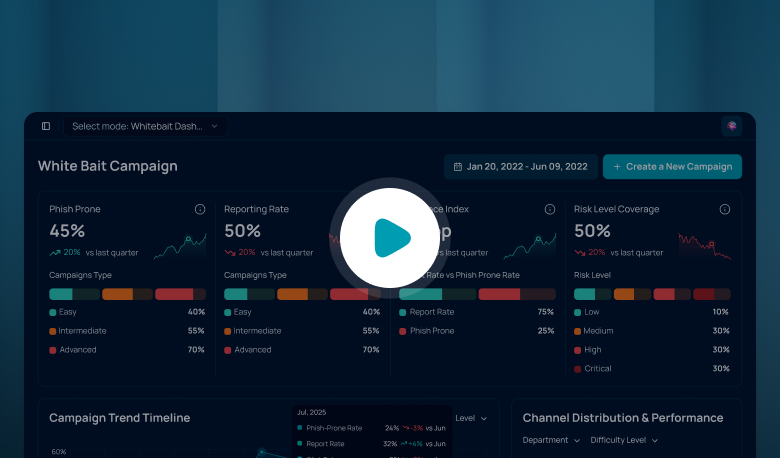
Fraus built Whitebait around these points. It offers AI-recommended campaigns, Arabic and English templates, MFA bypass, QR code and credential harvesting scenarios, UAE or GCC hosting or on-premise deployment, and reporting rate alongside click rate.
The scenario list deserves a closer look, because attackers do not stay in the inbox.
Scenarios That Match How Attacks Arrive
The same Verizon report found that in phishing simulations, the median success rate for mobile-centric vectors such as voice and text messaging is 40% higher than for email. The UAE Cyber Security Council's April 2026 advice to the public points the same way: avoid scanning QR codes in public or untrusted places, and enable multi-factor authentication.
MFA bypass. A lure that sends someone to a fake sign-in page and captures the one-time code tests whether people treat a second factor as proof that a page is genuine. A program that only simulates password theft never asks that question.
QR codes. A QR code on a poster or inside a PDF moves the decision to a phone, away from the mail gateway and away from the habits staff built around email links.
Credential harvesting. This stays the baseline scenario. It works best when the template looks like a system the person uses every day, written in the language they use it in.
Which of these you run, and how often, depends on what each person has to defend and on what your regulator expects.
What UAE Regulation Says About Awareness
The UAE Information Assurance Regulation (version 1.1, March 2020), published on the TDRA website, applies to all UAE government entities and to other entities designated as critical, and it highly recommends that all other entities in the UAE adopt it voluntarily, as applicable. Its Awareness and Training control family states that an awareness and training program shall be implemented to inform entities of the risks associated with their activities, and that personnel assigned information security responsibilities are trained to be competent in them.
Other emirate-level and sector frameworks may apply to your organization as well. Check the wording of each against your own entity before you set a schedule, and ask every vendor to show how its reports map to the controls you are audited on. Ask for its own credentials too: Fraus holds ISO/IEC 27001 certification and UAE IA compliance, and is aligned with the NIST Cybersecurity Framework.
An auditor will ask for evidence, which brings the question to the report itself.
What the Report Should Show
A click rate alone tells you who fell for a lure and leaves out who noticed it. A useful report carries these measures for every campaign:
- Click rate and reporting rate, side by side.
- Time to report, from delivery to the first report.
- Repeat behavior: who clicked again across campaigns.
- Results by role, department and language.
- Results by scenario: email, QR code, MFA bypass and credential harvesting.
Boards want these figures on one page, and our post on security awareness KPIs for the board shows how to lay them out.
Cadence follows the same logic. A calendar of campaigns across the year, with scenario and difficulty matched to each person, produces enough data points to see repeat behavior, which a single annual test cannot. If you want that schedule to run inside guardrails you set once, read how automated phishing simulation works.
Run a 30-Day Check Before You Commit
Go back to the awareness manager choosing a platform before the next budget meeting. Ask each shortlisted vendor to run a 30-day pilot against one department, with one Arabic template, one English template, one QR code scenario and one MFA bypass scenario.
At the end, check whether the report shows reporting rate next to click rate, whether the data stayed where your rules require, and whether the Arabic templates read the way your staff write. Then send the people who clicked into short follow-up training, such as Codex, and compare the next campaign with the first.
Frequently Asked Questions
How often should organizations run phishing simulations?
Run them continuously through the year instead of once. A calendar that varies scenario, channel and difficulty gives you repeat-behavior data, and a per-person schedule keeps each campaign at the right level for that role. Automated platforms can hold that schedule inside guardrails you set once, so the program does not depend on someone remembering to launch it.
What should a phishing simulation report include?
Show click rate and reporting rate for the same campaign, time to report, repeat behavior, and results split by role, department, language and scenario. Those figures let a CISO see whether people are noticing lures sooner and whether the same individuals keep clicking, which a single click percentage hides.
Which regulations require cybersecurity training for Dubai enterprises?
The UAE Information Assurance Regulation applies to government entities and entities designated as critical, and its Awareness and Training family calls for an awareness and training program. Other entities are encouraged to adopt it. Your compliance team can confirm which emirate-level or sector frameworks also apply to you.