
The UAE's national industrial strategy, Operation 300bn, aims to raise the industrial sector's contribution to GDP from AED 133 billion to AED 300 billion by 2031. It includes support for more than 13,500 industrial SMEs and wider adoption of Fourth Industrial Revolution technology across plants.
More connected plants mean more people whose inbox can reach production. Buyers deal with many suppliers, engineers exchange drawings with customers, and planners share schedules with logistics partners. Each of those conversations is a thread an attacker can hijack, and the UAE Cyber Security Council counts oil and gas, a large part of the region's industrial base, among the most targeted sectors in the country.
Case Study
01
In December 2018, attackers weaponized an attachment in an email that an employee at a trusted customer sent to an employee at Norsk Hydro, one of the world's largest aluminum producers. The email was part of a genuine conversation between the two companies. Opening it installed a Trojan. Antivirus caught it a few days later, but by then the attackers had their foothold.
Over the next three months they captured administrative credentials. In March 2019 they pushed LockerGoga ransomware out from Hydro's own domain controllers. The attack reached all 35,000 employees across 40 countries, stopped production lines at some of the company's 170 plants, forced others onto manual operation, and cost close to US$71 million. Hydro refused to pay the ransom, and afterwards began sending employees test phishing emails as part of its awareness program.
02
There was no stranger to be suspicious of. The message came from a person the employee dealt with, inside a conversation that was already under way, on a subject both companies were working on. Every cue that awareness training teaches people to check, the sender, the context, the relevance, pointed to a legitimate email.
In procurement and engineering, attachments are the working material of the job. Opening one from a customer is not a risk assessment; it is the next step in a task. The only clue would have been something faintly off in tone or timing inside a trusted exchange, and noticing that kind of detail, dozens of times a day, is a skill people only develop through repeated practice.
03
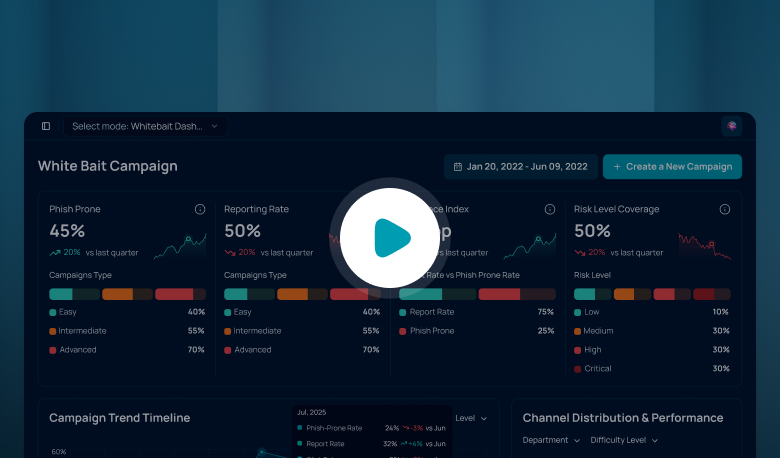
Staff need practice on lures that look like their actual correspondence. Dolus AI Studio turns a screenshot of a real supplier or customer email into an editable simulation template, so tests resemble the threads your buyers and engineers work in every day, and Whitebait raises difficulty as each team improves.
Odin weights procurement, finance, and engineering staff by role criticality, because their inboxes connect to suppliers, customers, and production data. When one of them crosses a critical threshold, Odin escalates to the right stakeholders automatically. Fraus counts reports as well as clicks, so flagging an odd message from a trusted sender shows up as a success in the results.
Plant and office workforces in the UAE are multilingual, and Codex delivers short training in Arabic and English that fits around shift patterns.
After the attack, Hydro began testing its own employees with simulated phishing. Fraus lets you start before an attack instead of after one.
Codex modules are short and built to fit into the working day. For organizations on Microsoft Teams, training and policy acknowledgements can also arrive as Teams messages.
Yes. Whitebait and Blackbait both include QR-based phishing alongside credential harvesting and MFA bypass scenarios.
Fraus is built for large groups and multi-entity environments, and Odin rolls risk up through team, department, and business unit level.
Fraus focuses on the people side: the engineers, operators, and contractors who have access to OT environments. It measures their exposure and reduces it through simulation and training.