




Open the Arabic version of a training module and read the first screen aloud. If it sounds like English written in Arabic letters, your employees have already noticed. This post is for security awareness managers in the UAE and wider GCC who are comparing Arabic security awareness training and need a way to tell authored content from translation.
In short: Arabic security awareness training works when the Arabic was written for the situation, not converted after the English was finished. Check the scenarios, tone, layout and simulations, and keep one risk record per employee across both languages.
Why Arabic Security Awareness Training Matters
Arabic is the official language of the UAE, and the UAE government fact sheet names five other official languages for court proceedings: Chinese, English, French, Hindi and Russian. It adds that Bengali, Farsi, Malayalam, Turkish and Urdu are also widely spoken. A single office in Dubai or Abu Dhabi can hold all of these on one floor.
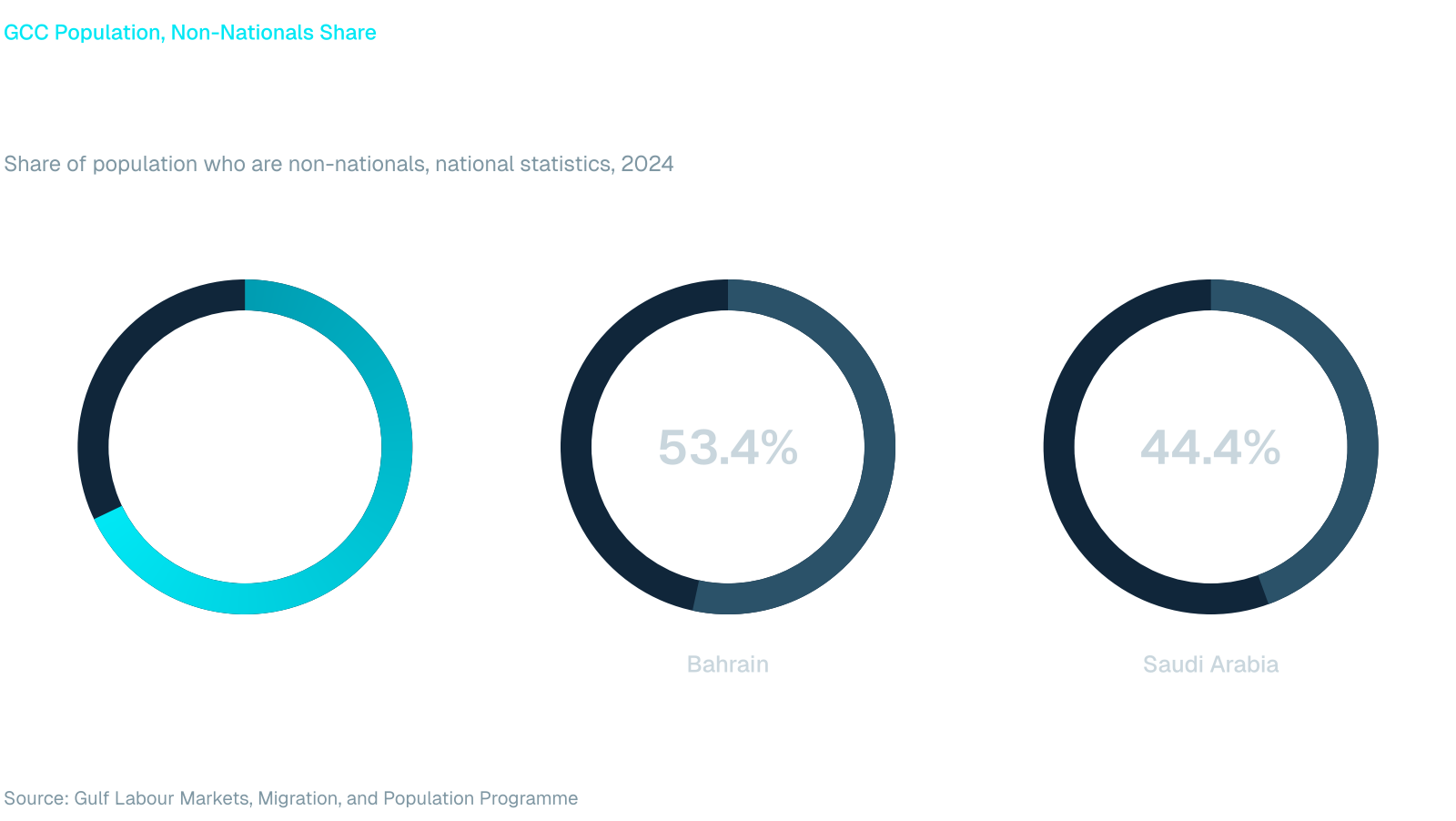
The wider Gulf looks similar. National statistics compiled by the Gulf Labour Markets, Migration, and Population Programme show non-nationals making up 67.9% of Kuwait's population and 53.4% of Bahrain's in 2024, and 44.4% in Saudi Arabia. Population is not workforce, and it says nothing about who reads which language, but it explains why a program in one language leaves part of the staff learning in their second.
Government programs reflect this. The Telecommunications and Digital Government Regulatory Authority offers its information security awareness sessions to government employees in Arabic and English. Offering both is the baseline. The harder question is whether the Arabic is any good.
Telling Authored Arabic From Translation
A translated course tends to give itself away in small ways: stiff phrasing, scenarios that only make sense in another country, buttons that point the wrong direction. Ask the vendor for the full Arabic scripts and give them to a native reader in your own team. Then run through this list.
- Scenarios. The situations belong to your region: a payroll notice, a courier delivery, a supplier changing bank details, not a scenario about a service your staff have never used.
- Register. The text sounds like a colleague at work, with no word-for-word English sentence structure showing through.
- Direction. Right-to-left holds across quiz answers, progress bars, email previews and certificates, including links and numbers placed inside Arabic sentences.
- Terms. Each security term has one Arabic rendering, used throughout, and the English term appears where staff meet it in their own tools.
- Parity. The Arabic course has the same modules, depth and update dates as the English one, not a shorter subset.
A course that passes these checks was edited by someone who reads Arabic for a living. One that fails two or three was probably converted at the end of the project, and your staff will treat it as a formality. Content is only half the program, though, because the test of what people learned is the simulation.
Arabic Phishing Training Needs Native Lures
Arabic phishing training has two parts, the lessons and the simulated attacks, and both must be in the language the employee reads. If someone trains in Arabic but only ever receives English test emails, you are measuring a skill the training never covered. The reverse has the same flaw.
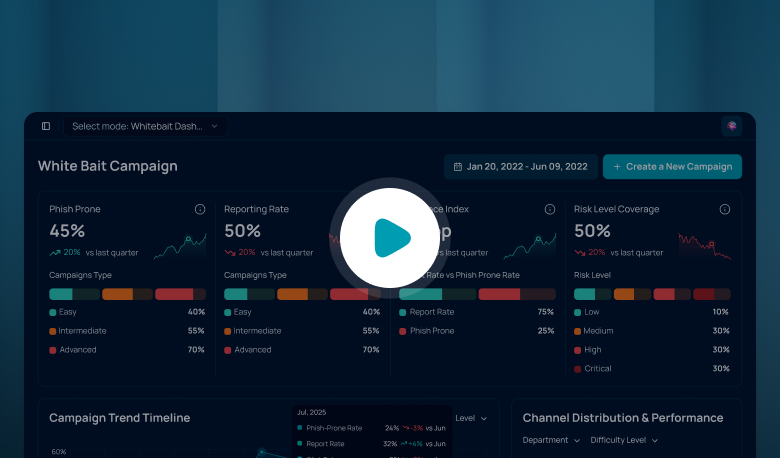
Check that the simulation library has Arabic templates written as lures, with the pressure, urgency and wording a real message in Arabic would carry. Whitebait runs phishing simulation for UAE and GCC organizations with Arabic and English templates, and tracks the reporting rate next to the click rate, so you can see whether Arabic readers report as readily as English readers.
When someone does fall for a lure, the lesson should arrive in their language, matched to what they just did. Codex delivers security awareness training in Arabic and English as agentic AI-driven micro-learning: short lessons that Fraus's agentic AI recommends or assigns to each person from their training gaps and behavioral signals. Just-in-time coaching inside Microsoft Teams closes the gap between the mistake and the lesson.
Running Bilingual Security Awareness Training
Bilingual security awareness training often breaks down in the reporting rather than the content. If Arabic and English learners sit in separate spreadsheets, nobody can compare them. Ask a hard question of every platform: does one employee keep one record, whichever language they train in?
That one record is what makes English Arabic cybersecurity training measurable. Odin keeps continuous per-employee risk scores and individual threat profiles, so an employee who reads Arabic and English moves through the same profile whichever language a lesson arrives in. Split your reports by language at least once a quarter to find where the gap is.
If you are still building the shortlist, the UAE buyer's checklist covers the wider criteria, and the phishing simulation guide covers what to check before you buy simulation. This post covers the language layer on top of both.
Test the Arabic Before You Sign
Back to the first screen. Before you commit to a platform, ask for a pilot where two native Arabic readers from different departments, such as finance and operations, review three modules and one simulation. Have them mark every sentence that sounds translated and every scenario they would not recognize.
Their notes will tell you more than a feature list. If they mark a handful of lines, fix them and go ahead. If they mark pages, you have learned that cheaply, before the rollout.
Frequently Asked Questions
How do I check whether a platform really supports Arabic?
Request the full Arabic scripts for lessons and the simulation templates, not a screenshot. Have a native reader and a non-specialist employee review them for tone, local scenarios and right-to-left layout. Ask whether new content arrives in Arabic and English on the same date.
Are phishing simulations available in Arabic as well as courses?
They should be, and you should confirm it before buying. Some programs translate the courses and leave the simulations in English, which tests a different skill. Whitebait provides Arabic and English templates for UAE and GCC organizations, with reporting rate tracked next to click rate.
Can the same employee receive content in Arabic and English?
A bilingual program should let each person work in the language they read best. Codex delivers training in Arabic and English, and Odin keeps one risk profile per employee, so lessons in either language feed the same record.
Do UAE authorities treat Arabic and English as standard for awareness?
The UAE Telecommunications and Digital Government Regulatory Authority runs its awareness sessions for government employees in Arabic and English. That is a useful reference point when you set the language standard for your own program.