


SAMA expects banks operating in Saudi Arabia to put fresh fraud and information security awareness material in front of branch and customer service staff at least every three months, and to test and survey those employees at least every six months. That is a concrete cadence, and it sets a useful bar for security awareness training for banks anywhere in the Gulf. This post is for CISOs who need to turn that bar into a plan that covers every role in the bank, not only the front line.
In short: Train each group of bank staff on the threats its job exposes it to, set a cadence the regulator can see in your records, and measure behavior such as reporting and repeat mistakes instead of course completion.
What GCC Regulators Expect From Bank Staff
Saudi Arabia offers the clearest text. The SAMA Cyber Security Framework asks banks to run separate awareness programs for staff, third parties and customers, to tailor content to each group, to repeat activities throughout the year and to cover current threats such as spear-phishing and whaling. It also asks banks to evaluate the program and use the results to improve it. A companion training control covers key roles, cyber security staff, and staff who develop or maintain information assets.
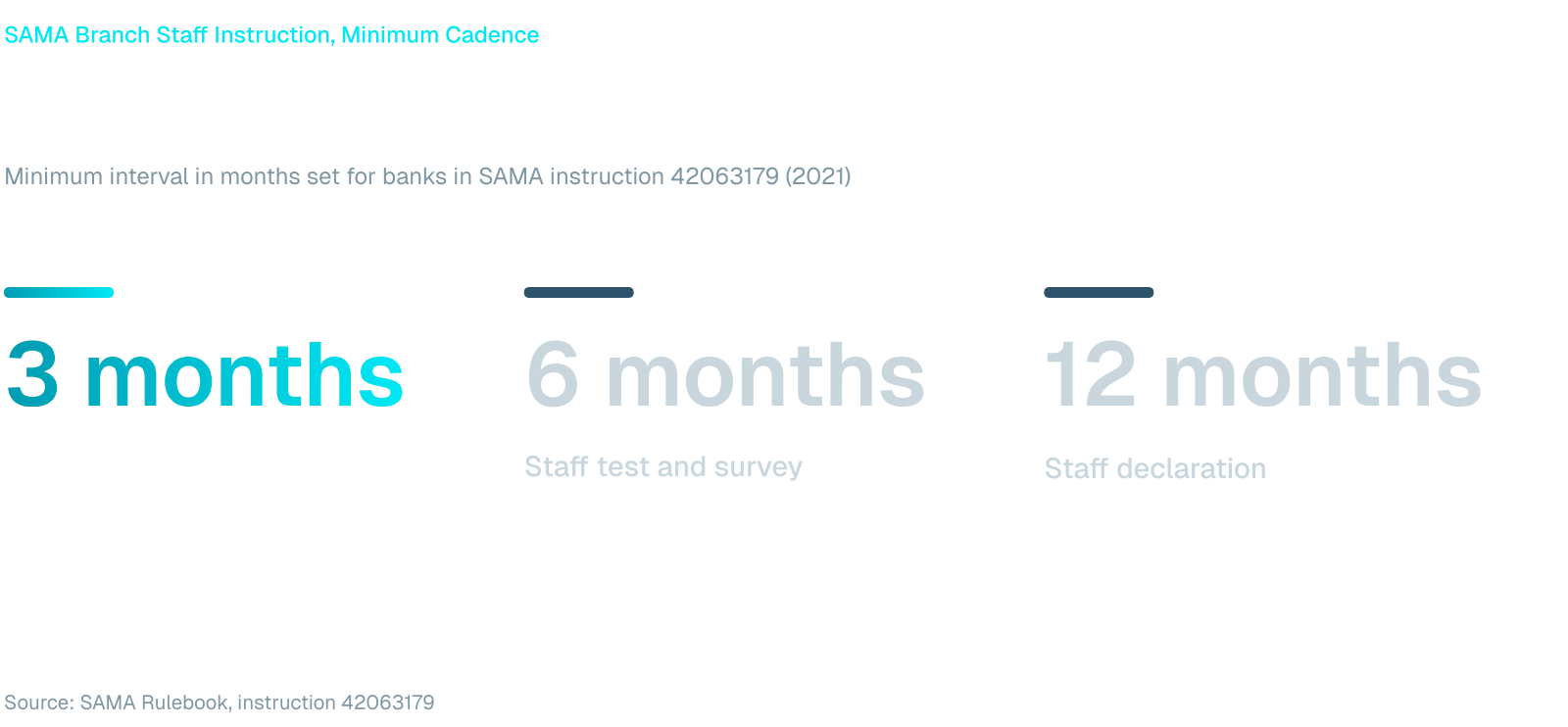
For the front line, SAMA goes further. Its 2021 instruction on branch and customer service employees asks banks to run information security and financial fraud awareness campaigns with ongoing materials at least every three months, to test and survey employees at least every six months, and to collect a signed declaration on the secure-use policies when staff join and every year after.
The UAE text is broader. Article 6 of the Central Bank's Consumer Protection Standards, on protection of consumer data and assets, requires employee training and awareness on the data control framework, with annual reminders that protecting consumer data is an ongoing staff duty, and up-to-date staff training on the control framework. The same article requires fraud awareness campaigns every year, and more often when fraud is rising.
These texts agree on the point that matters for planning. Content has to fit the group, so the bank has to decide first who the groups are.
Security Awareness Training for Banks by Role
A bank has at least five groups whose daily decisions attract different attackers, and each needs bank employee cybersecurity training built around its own moments of risk. Our guide to role-based security awareness training covers the method. Here is how it looks inside a bank.
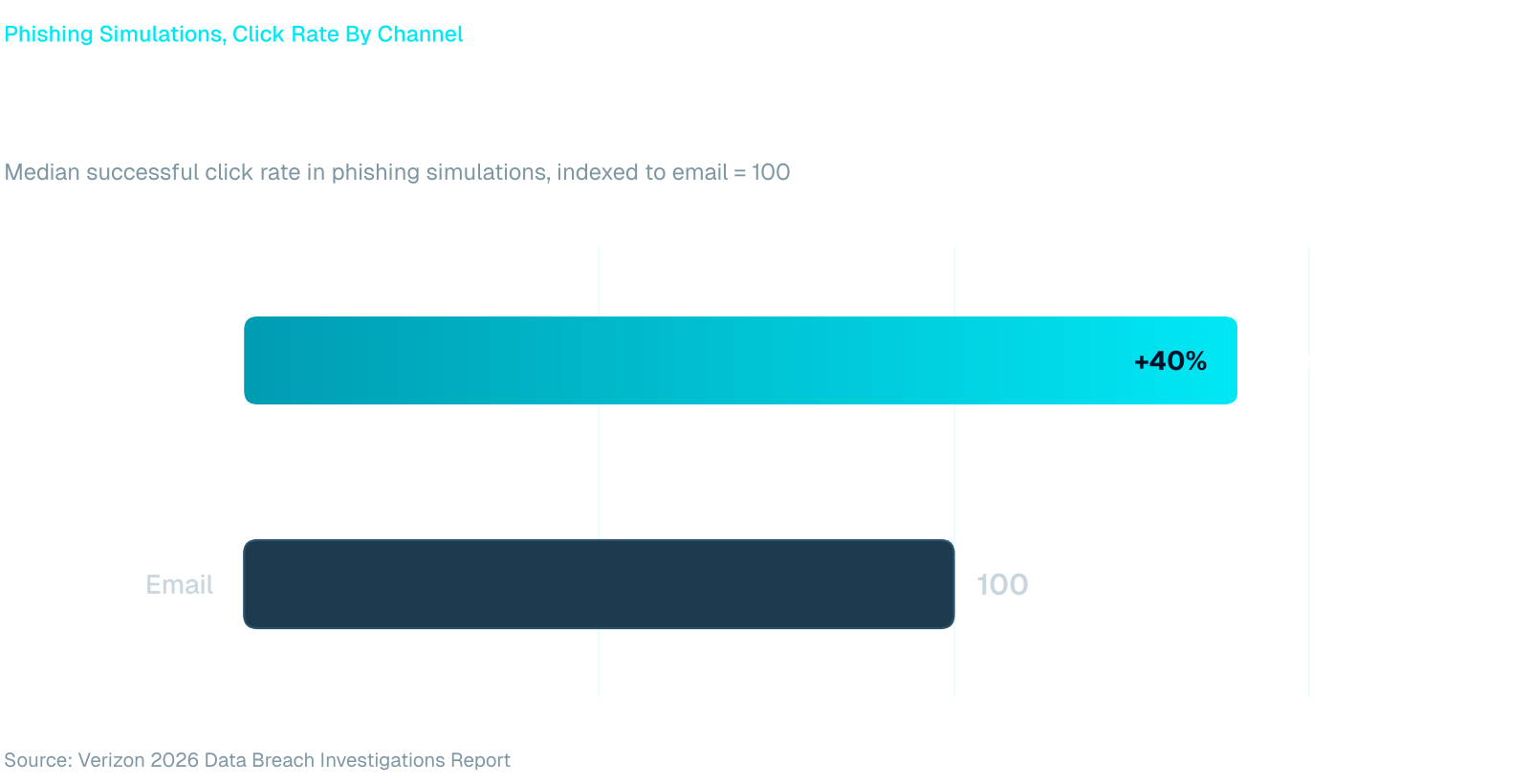
Branch and contact center. These staff take calls and visits from people who claim to be customers, and they are the audience SAMA names in its 2021 instruction. Train them to verify identity before any account change, to recognize pressure scripts and to report odd approaches. The Verizon 2026 Data Breach Investigations Report found that mobile lures such as fake texts and voice calls draw click rates 40% higher than email phishing, so voice practice belongs here. See our post on vishing awareness training.
Payments and treasury. Payment staff meet requests that look routine: a changed beneficiary, an urgent transfer, a message that seems to come from a senior colleague. Their training centers on out-of-band verification and call-back habits. Business email compromise is one threat among several in this group, and our post on business email compromise training covers it in depth.
Relationship managers. They hold client details and take instructions by email, chat and phone, so a convincing impersonation of a client is their main exposure. Teach them to confirm instructions through a registered channel and to treat unusual urgency as a reason to slow down.
IT and helpdesk. Helpdesk agents reset passwords and enroll devices, which makes them a target for callers who claim to be locked-out staff. SAMA's training control names staff who develop and technically maintain information assets, so this group's program should also cover careful handling of privileged access.
Executives. SAMA names whaling, meaning targeted attacks on senior people, as one of the current threats awareness content should cover. Executives approve large payments and hold wide access, and their time is short, so brief scenario sessions fit them better than long courses.
Training sets the knowledge. Simulation shows whether it holds under pressure, and that is where matching to the role pays off most.
Phishing Simulation for Banks Matched to the Job
A single campaign sent to every mailbox tests a branch teller and a treasury analyst with the same lure, and it tells the CISO little about either. Phishing simulation for banks works better when the lure fits the role: a customer escalation for the contact center, a beneficiary change for payments, a locked account for the helpdesk.
Graybait from Fraus is a campaign-less program. Agentic AI picks or generates each employee's next simulation from their Human Risk Profile, matches the lure to their role, context and history, and raises the difficulty as a person keeps spotting attacks. The platform is available in Arabic and English, which suits front-line teams who serve customers in both languages.
Count reports as well as clicks. A teller who reports a suspicious call within minutes gives the security team an early warning that quietly ignoring it does not. Our post on phishing simulation metrics explains how to track reporting rate next to click rate.
Prove the Program Works, Role by Role
SAMA asks banks to evaluate the awareness program and use the results to improve it, and its branch instruction asks for a test and survey of front-line staff at least every six months. Evidence of that kind is easiest to produce when records are kept per role. A financial services security awareness program can keep four of them:
- Which material each role received and when
- How each role performed in simulations
- How quickly each role reported suspicious messages and calls
- Who repeated a mistake, and what followed
Response matters as much as measurement. When someone in payments clicks a risky link, the useful moment for training is that day. Just-in-time coaching from Fraus responds to risky behavior with matched training inside Microsoft Teams, and Codex micro-learning lessons are assigned to each person from their training gaps.
Start With a Role Map
Go back to the quarterly cadence SAMA sets for branch staff. Write down the five groups in your bank, the regulator text that applies to each, the threat each faces most and how often you will reach them. That page is the plan. The Fraus financial services page has more on how Fraus supports financial institutions.
Frequently Asked Questions
What should security awareness training for banks cover?
It should cover the threats each role meets: impersonation calls and texts, phishing, payment instruction fraud, targeted attacks on executives, and secure handling of credentials and customer data. SAMA names spear-phishing and whaling, and its branch instruction adds financial fraud prevention and the secure use of banking systems.
How often should bank staff be trained?
SAMA sets a floor for branch and customer service staff: new material at least every three months, with a test and survey at least every six months. Its framework asks for activities throughout the year for other groups. The rest is for the bank to set by role exposure, with high-exposure roles reached more often.
Do GCC regulators require phishing simulation?
SAMA asks banks to test and survey branch and customer service staff at least every six months, and to evaluate how effective the awareness program is. It does not prescribe a method. Banks can use phishing simulation to produce that evidence, split by role, alongside reporting rates and repeat behavior.
Should bank training be in Arabic and English?
Customer-facing staff in the Gulf serve people in both languages, and lures arrive in both, so practice should too. Fraus is available in Arabic and English. Our post on Arabic security awareness training explains what to check in authored versus translated content.