




A client's security lead wants to show the board that staff are getting better at spotting phishing, and asks the provider that runs their security operations for the numbers. For an MSSP with many clients, that one request becomes a separate program for each of them. This guide to phishing simulation for MSSPs is for MSSP and MSP leaders in the UAE and GCC who want to run it for every client without keeping a spreadsheet per client.
In short: phishing simulation for MSSPs works when each client has its own environment, content in Arabic and English, approval before anything is sent, and reporting the client can read. One platform runs the program while each tenant's data stays apart.
What Clients Ask Their Provider to Run
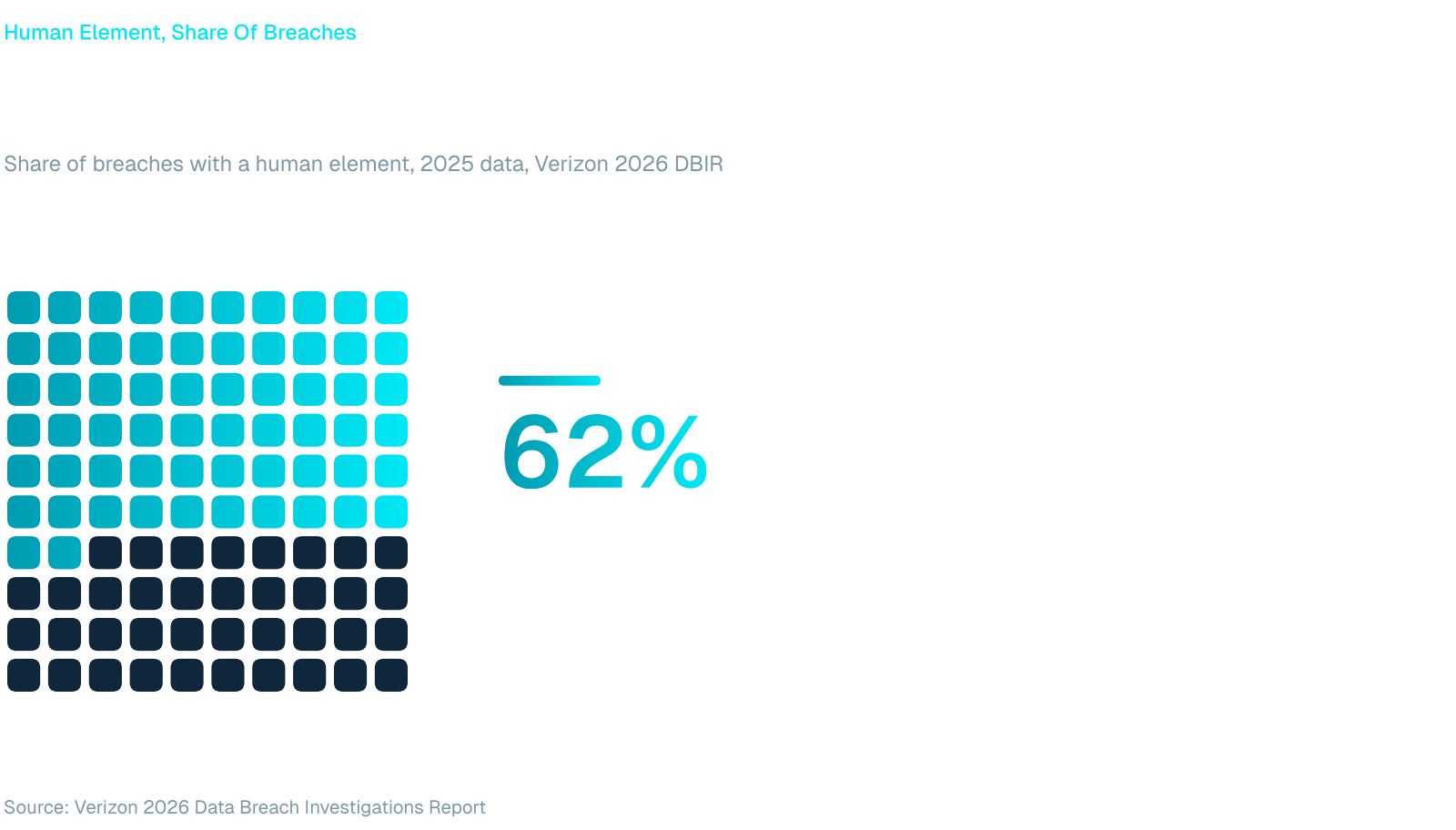
Clients ask for simulation because people sit inside most breaches. The Verizon 2026 Data Breach Investigations Report found that people were involved in 62 percent of breaches. A security lead who reads that number wants proof that their own staff are covered, and the provider is the obvious place to ask.
The regional context adds weight. In Dubai, the DESC SOC Security Standard is mandatory for all providers that offer security operations center services to Dubai government and semi-government entities. Providers in that market already work to written standards, so a phishing program run on the same footing is easier to defend in a client review.
Phishing Simulation for MSSPs Starts With Tenants
A multi-tenant phishing simulation setup gives every client or entity a separate environment, so employee lists, templates and results for one client never mix with another's. The Fraus multi-tenant and MSSP solution provides separate environments per client or entity, approval workflows and an audit trail.
Approval workflows matter more than they sound. A simulation that imitates a client's HR or finance sender and goes out without sign-off is the quickest way to lose that client's trust. An approval step lets the right person confirm the audience, template and timing, and the audit trail records who approved what.
Data location comes next, because some clients cannot let employee data leave the country. Fraus can be hosted on UAE or GCC servers or deployed fully on-premise, a topic covered in on-premise phishing simulation for GCC entities. When you assess an MSSP phishing simulation platform, check these first:
- A separate environment for each client or entity
- Approval before any simulation is sent
- An audit trail you can show the client
- Hosting in the UAE or GCC, or on-premise, where the client requires it
- Arabic and English content inside the same program
Two Languages, One Program
Gulf workforces read Arabic and English, often in the same inbox. A program that only translates English templates feels off to Arabic speakers, and an odd lure is easy to spot, which flatters the results. Whitebait ships Arabic and English templates, and the training side is covered in Arabic Security Awareness Training: Authored or Translated?.
Training follows the same rule. An MSP security awareness platform has to teach as well as test, and Codex delivers security awareness training in Arabic and English, with micro-learning that Fraus's agentic AI recommends or assigns to each person based on their training gaps and behavioral signals.
Running Many Clients Without Many Campaigns
Campaign calendars grow with every client you add. A small team cannot plan, launch and review a separate campaign for each tenant every month, and the reviews are the first thing to slip. That is where a campaign-less model fits an MSSP better.
Graybait runs phishing simulation without campaigns. Setup takes four steps (connect the workforce, set guardrails, choose an objective, activate), it runs for twelve months, and the team steps in only when the system asks. Agentic AI picks each employee's next simulation from their Human Risk Profile and sets its difficulty, theme and timing. The autonomous phishing simulation guide explains how that works.
Where you want fixed responses, Agentic Automation Rules take a trigger such as a simulation result and assign a nudge, module or policy. Higher-stakes actions always wait for analyst approval, and every agentic action is logged for audit.
Reporting Each Client Can Read
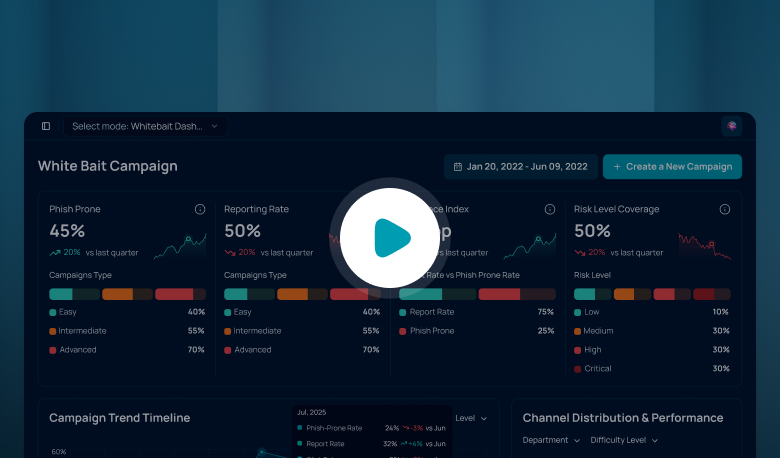
Clients ask two questions after a simulation: who clicked, and who reported. Whitebait tracks reporting rate next to click rate, so the report shows how many people raised the alarm, which is the behavior a SOC can act on.
Decide on two views before the first client goes live. The client sees one page for their own board, and your delivery team reviews every client's results side by side so weak spots surface early. Either way, each client's numbers come from its own environment.
Next Step for Your Provider Team
Go back to the client who asked for board numbers. Take the five checks above, run them against that one client, and set up a single tenant with Arabic and English content and an approval step. If the report that comes out of it is one the security lead can hand to the board without edits, the same pattern will carry to the rest of your clients.
Frequently Asked Questions
What should a service provider look for in a phishing simulation platform?
Separate environments for each client, approval before sending, an audit trail, UAE or GCC hosting or on-premise deployment, and Arabic and English content. Also look at how much staff time each client needs each month, because a platform that needs a campaign per tenant will not scale with your client list.
What is managed phishing simulation?
It is a service in which the provider plans, sends and reports on phishing simulations for a client instead of the client doing it in-house. The provider handles audience, content, timing and results, and the client approves and receives the reporting.
Why are clients asking for phishing simulation?
Boards and regulators want evidence that staff behavior is being managed, and people are involved in most breaches. Clients already trust their provider with security operations, so they ask that provider to show click and reporting rates for their own people.