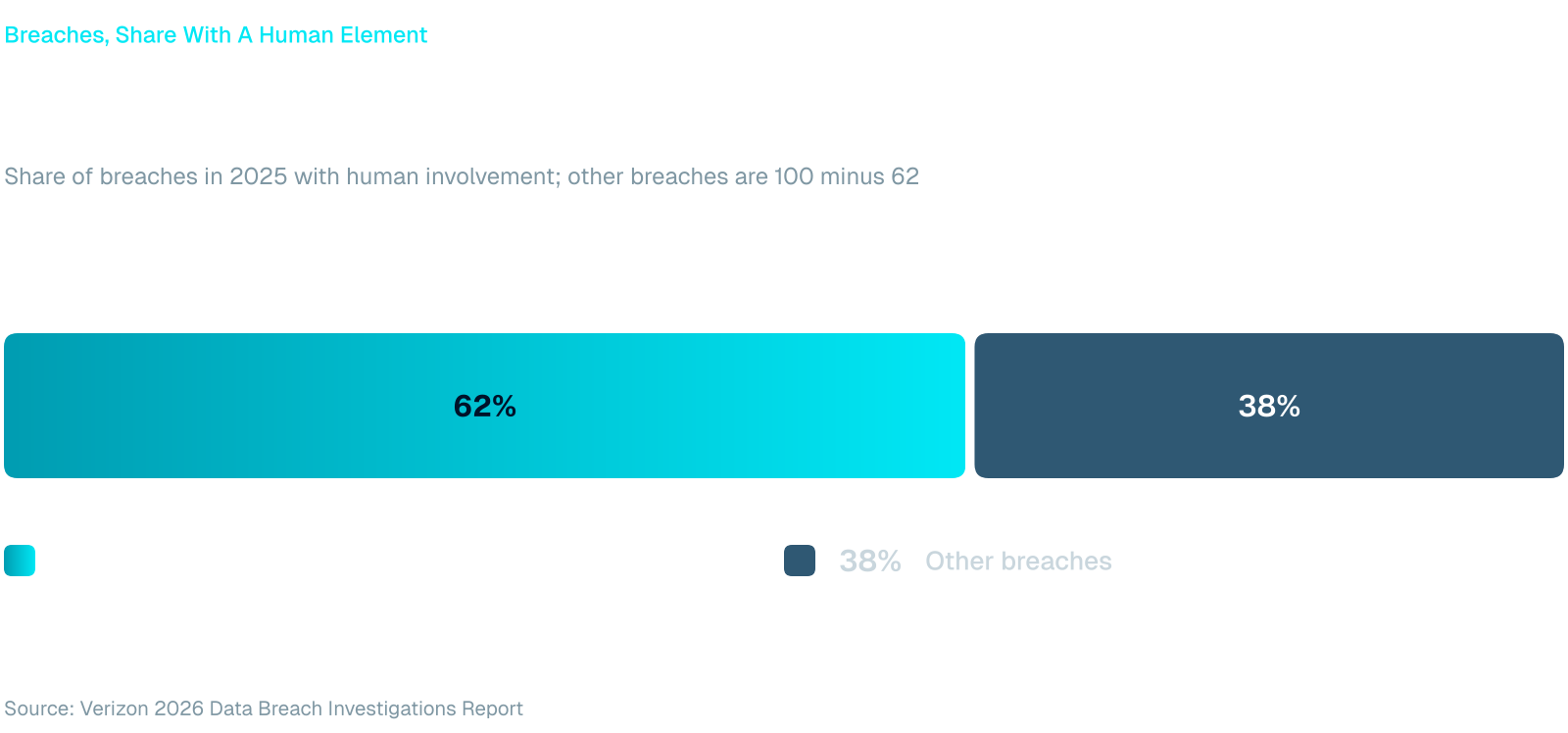





The human element was present in 62% of the breaches analyzed in the 2026 Data Breach Investigations Report, up from 60% the year before. Security awareness microlearning is one way to reach those people between the annual course and the next incident. This post is for security awareness managers deciding how to run it across a large workforce.
In short: Short lessons only help when the right one reaches the right person. Codex uses agentic AI to recommend or assign each person's next lesson from their training gaps and behavior, so nobody has to schedule it by hand.
What Security Awareness Microlearning Must Decide
Most definitions of microlearning start with length: a lesson short enough to finish between meetings. Length is the easy part. The harder decisions are which lesson, for whom and when, and across thousands of employees nobody can make those calls by hand.
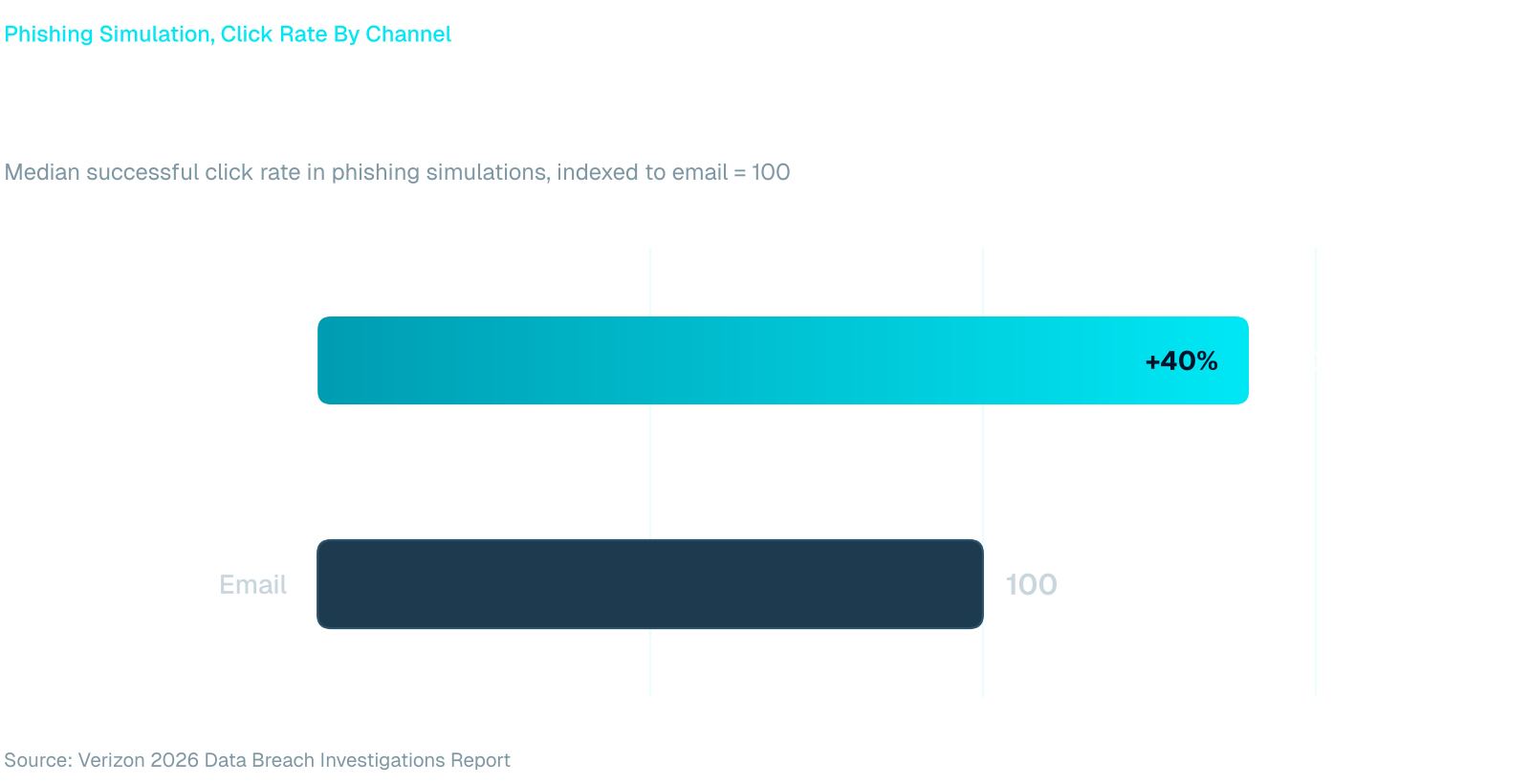
Those decisions differ by attack. Phishing asks a person to click, while pretexting, where an attacker builds a believable story, asks a help desk agent or a finance clerk to act. The same report found that in phishing simulations the median click rate for mobile-centric lures, such as fake texts and calls, was 40% higher than for email.
A course written last year will not reflect that shift. A library of short lessons that a system chooses from can, which is why cybersecurity microlearning depends more on the selection logic than on the lesson format.
NIST takes a similar view in SP 800-50 Rev. 1, which describes a learning program as a life cycle that encourages behavior change as part of risk management. A lesson fits that description when it responds to what the person did last.
How AI Microlearning Picks the Next Lesson
In Codex, Fraus's agentic AI recommends or assigns each person's lessons from their training gaps and behavioral signals. The lessons are bite-sized and built into everyday work, so people meet them during the job instead of in a scheduled course block. That is the practical meaning of AI microlearning here: the AI makes the selection, and the admin sets the limits.
Gaps. A training gap is a topic a person has not yet covered, such as business email compromise or deepfake calls, both of which Codex teaches. Lessons are chosen to close that gap rather than to repeat the whole catalog.
Behavior. Someone who reports a simulated phish quickly and someone who enters credentials do not need the same next lesson. Odin, the Fraus human risk management product, tracks those signals through continuous per-employee risk scoring.
Role. Codex also has role-based learning paths and contextual lessons built on real-world scenarios, so the scenarios can differ for an accounts payable clerk and an executive assistant. Lessons are available in Arabic and English, which lets a mixed workforce learn in the language it works in.
Nudges, Rules and Approval Gates
Not every prompt has to be a lesson. Security awareness nudges are shorter reminders, and Codex includes them alongside full lessons. With Agentic Automation Rules, one rule can assign a nudge, module or video when a trigger fires, such as a simulation result, a training event or a risk score change.
Higher-stakes actions, such as step-up MFA or a finance approval hold, always wait for analyst approval. For events no rule covers, the agentic AI writes a contextual rule and acts in Off, Supervised or Unsupervised mode. In Supervised mode approvers confirm by email, and Unsupervised mode starts only after a 30-day trial in which it still asks first.
A related idea is just-in-time coaching, where training reaches a person the moment their behavior shows a risk. Fraus delivers that inside Microsoft Teams through Zero-Touch Training. This post stays with lessons assigned ahead of that moment.
Measuring Cybersecurity Microlearning
A completion rate shows that a lesson was opened, not that anything changed. Judge the program on behavior instead: reporting rate next to click rate, time to report, and whether the same person repeats the same mistake.
Compare results by role and department rather than against one company average, and watch whether a person's risk score moves after assigned lessons. The post on security awareness KPIs for the board shows how to condense this onto one page.
In the UAE the case for tracking this is practical. The UAE Government's Cybersecurity Council said in January 2026 that fraudulent messages had increased by 35% over the past year and called awareness the first line of defense, as Gulf News reported.
Start With One Group This Quarter
Go back to the 62%. Those people are your finance team, your help desk and your executives, and each group needs a different next lesson. A first pass can stay small:
- Pick one high-exposure group, such as finance or the help desk.
- Let Codex recommend lessons for that group from their gaps and behavior.
- Run the agentic rules in Supervised mode so approvers confirm each action.
- Track reporting rate and repeat behavior as your two measures.
- Review the results after 30 days before widening the group.
Once the first group shows movement, extend the same setup to the next one.
Frequently Asked Questions
What is security awareness microlearning?
It is security training delivered as short lessons on one topic each, chosen for the person receiving them. Instead of one annual course for everyone, employees get small pieces tied to their role, gaps and behavior, which makes it easier to cover new threats as they appear.
How is AI microlearning different from a monthly short video?
A monthly video goes to everyone on the same schedule. With AI microlearning in Codex, the agentic AI recommends or assigns each person's lessons from their training gaps and behavioral signals, so two employees in the same week can receive different content.
Do security awareness nudges replace lessons?
No. Nudges are shorter reminders that keep a behavior in view, while lessons teach it. Codex includes both, and automation rules can assign either when a trigger fires, such as a simulation result or a change in risk score.
Can the AI assign lessons without an administrator?
Admins choose the mode. In Supervised mode approvers confirm by email before the agentic AI acts. Unsupervised mode begins after a 30-day trial in which it still asks first. Admin rules take priority, and every agentic action is logged for audit.
Does microlearning replace annual training?
It depends on your obligations. Many organizations keep a baseline course for everyone, and Codex includes compliance mapping. Microlearning then covers the gaps that remain for each person, between the annual cycles.